
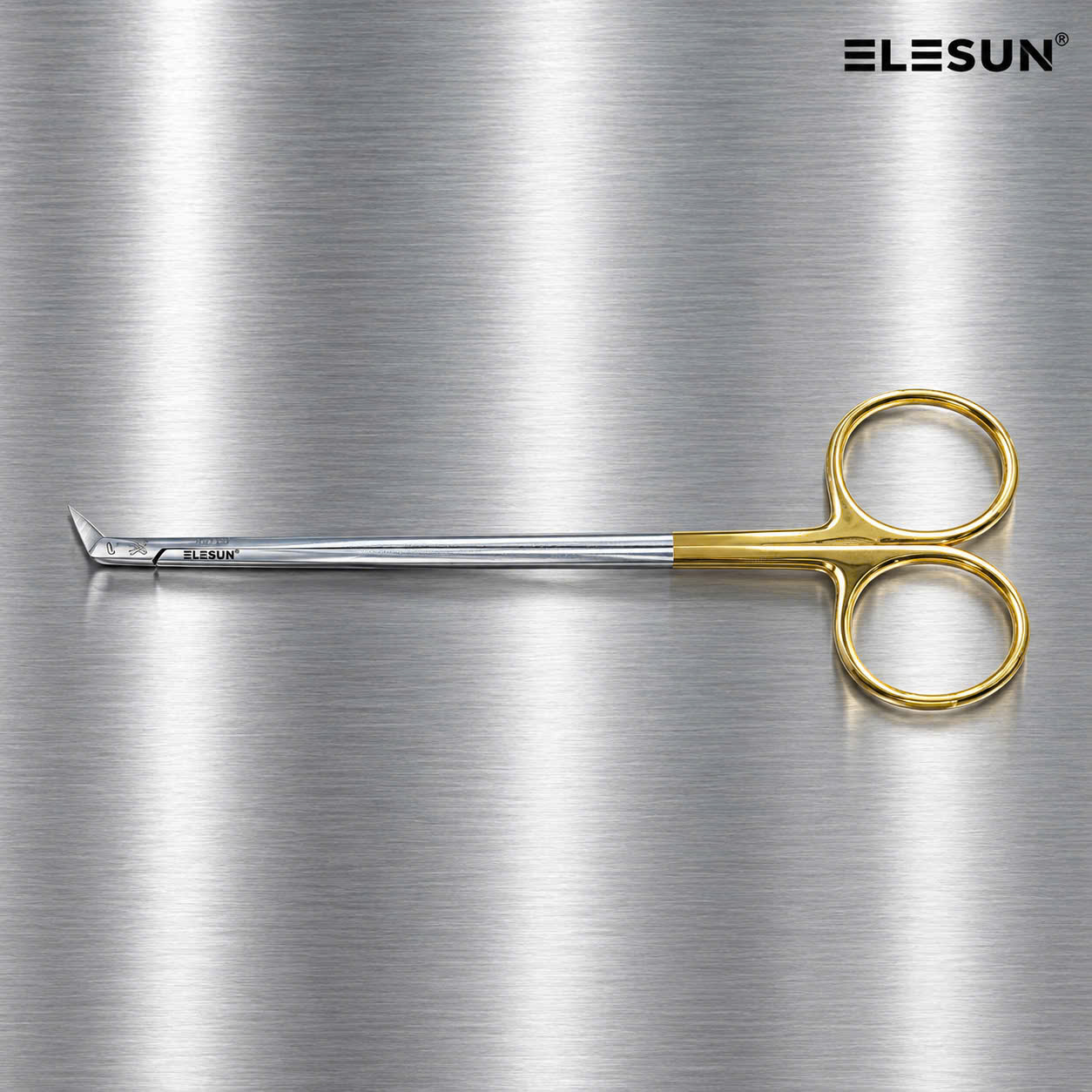
Vascular scissors are cutting instruments used to dissect perivascular tissue, extend the arteriotomy and cut sutures; microvascular instruments include micro scissors, needle holders and micro forceps used under magnification. This guide classifies blade designs, Potts-Smith-pattern scissors and needle holders, and explains selection by procedural requirement.
1. What Are Vascular Scissors & Microvascular Instruments?
Vascular scissors are articulated cutting instruments used to cut perivascular connective tissue during dissection, extend the arteriotomy and cut sutures. Microvascular instruments are small instruments used under loupes or an operating microscope, including micro scissors, micro needle holders and fine micro forceps. Both groups serve the vessel-opening and anastomosis stages, but they differ in size, grip and mechanism.
This guide completes the vascular knowledge cluster, following the vascular surgical instruments overview, the guide to Satinsky and Bulldog vascular clamps and the guide to DeBakey vascular dissecting forceps. It is professional knowledge and does not replace the manufacturer's instructions for use (IFU) or the surgeon's judgment.
2. Main Designs of Vascular Scissors
By cutting purpose, scissors used in vascular surgery usually fall into three groups:
- Dissecting scissors: straight or curved blades used to separate and cut connective tissue around the vessel during exposure.
- Arteriotomy scissors: fine blades angled to the shank, such as Potts-Smith-pattern scissors, used to cut along the axis of the vessel wall.
- Suture scissors: used after knot tying; keeping them separate from dissecting scissors protects the fine cutting edges.
Many cardiovascular and vascular instruments, scissors among them, carry the names of surgeons who designed them in response to specific clinical needs (Ailawadi and colleagues, 2010).
3. Potts-Smith-Pattern Scissors & Angled Blade Configurations
Potts-Smith-pattern scissors have finger-ring handles, long slender shanks and two small blades angled to the shank axis. The angle lets the blades lie parallel to the vessel axis when extending an arteriotomy, while the handles stay outside the line of sight. These scissors are used in vascular surgery, and design modifications have been described in the specialty literature (Nolte, 1995).
Blade angle, blade length and shank length vary between models; these values should be taken from the manufacturer's documentation for each instrument code. See the Potts-Smith angled vascular scissors with angled blades and long slender shanks in the ELESUN catalog.
4. Straight, Curved & Angled Blades
Blade orientation relative to the shank determines the direction in which scissors cut effectively:
- Straight blades: cut along the shank axis, suited to cuts in line with the direction of approach.
- Curved blades: keep the tips visible and follow curved tissue surfaces during dissection.
- Angled blades: place the cutting plane off the shank axis, used when cutting along the vessel wall in a confined space.
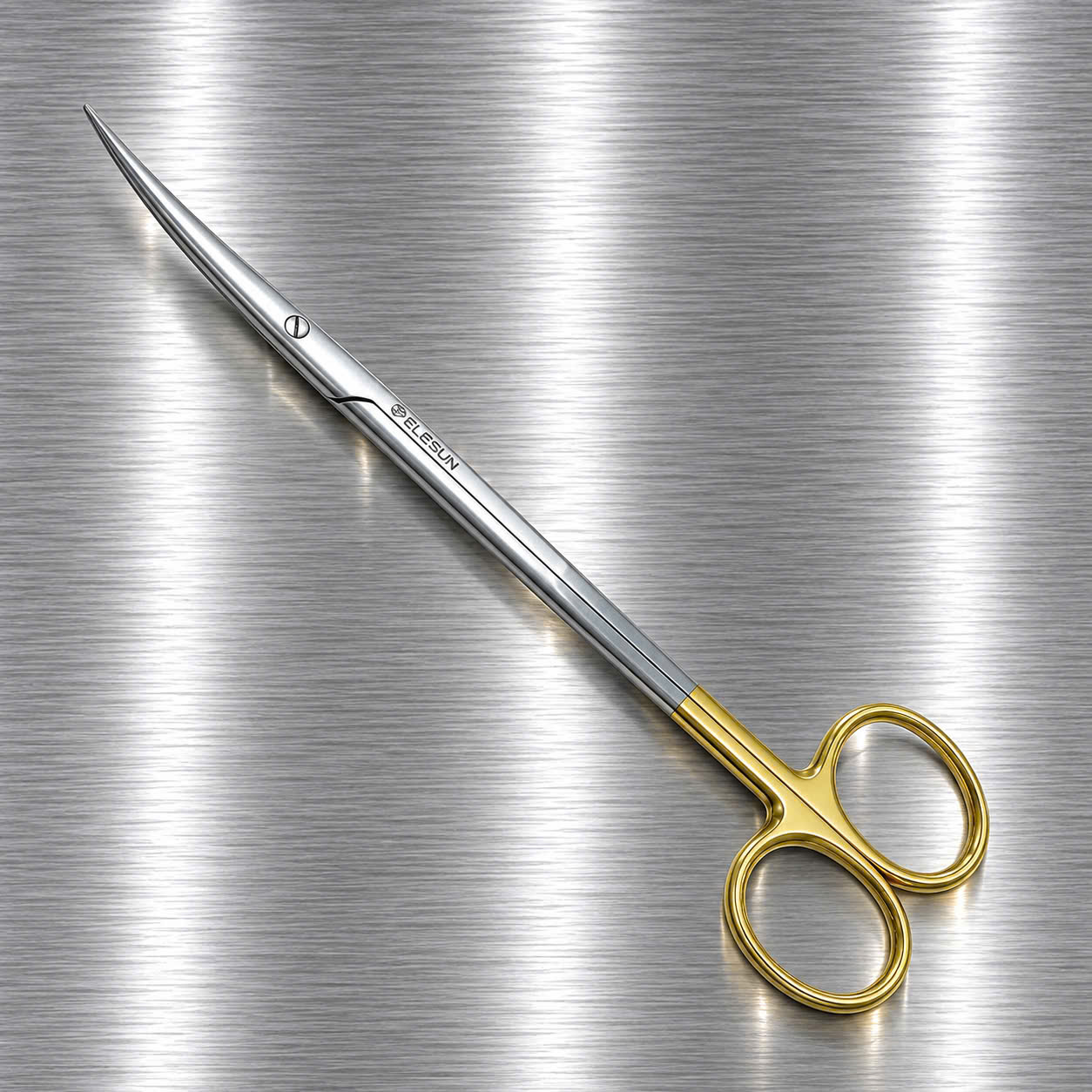
General principles of straight, curved and angled geometry are analyzed in the surgical instrument selection and design principles guide.
5. Microsurgical Scissors
Microsurgical scissors are used on small vessels under magnification. Unlike finger-ring scissors, they usually have a spring handle: two handles joined at the end that close the blades under finger pressure and reopen on release. Holding spring-handled instruments in a pencil grip translates wrist movement into small, stable finger movements under the microscope (Matsumura, 2012). Micro scissor blades may be straight, curved or angled depending on the model.
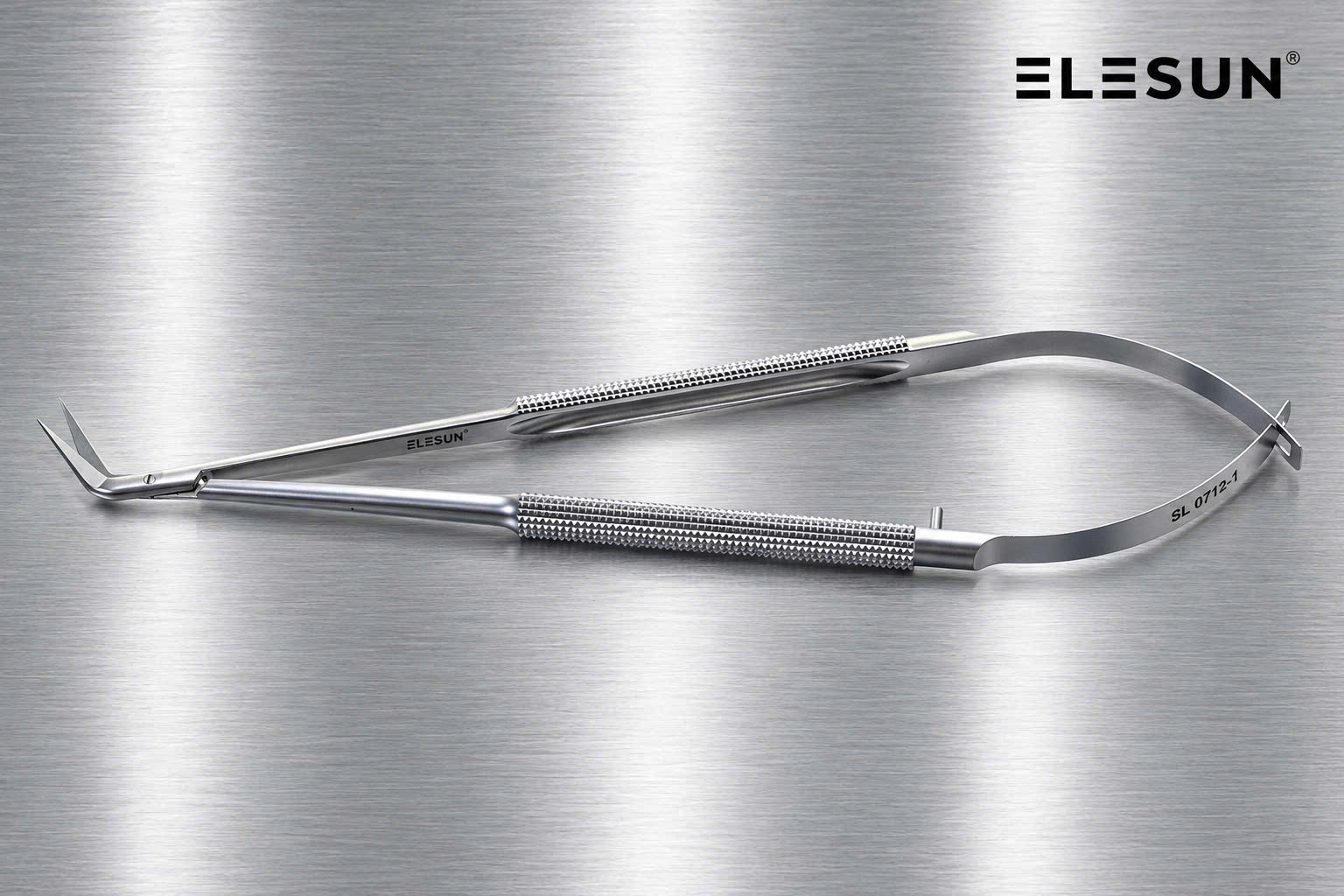
Configurations such as curved micro spring scissors and Vannas spring micro scissors are presented in the ELESUN microsurgery instrument catalog.
6. Vascular & Microvascular Needle Holders
Vascular needle holders
Vascular needle holders have finger-ring handles, a ratchet lock and long shanks for suturing in deep fields. Short jaws with a gripping surface suited to the needle size help keep the needle from rotating as it passes through the vessel wall. For non-cutting articulated instruments such as needle holders, ISO 7151 specifies general requirements and test methods.
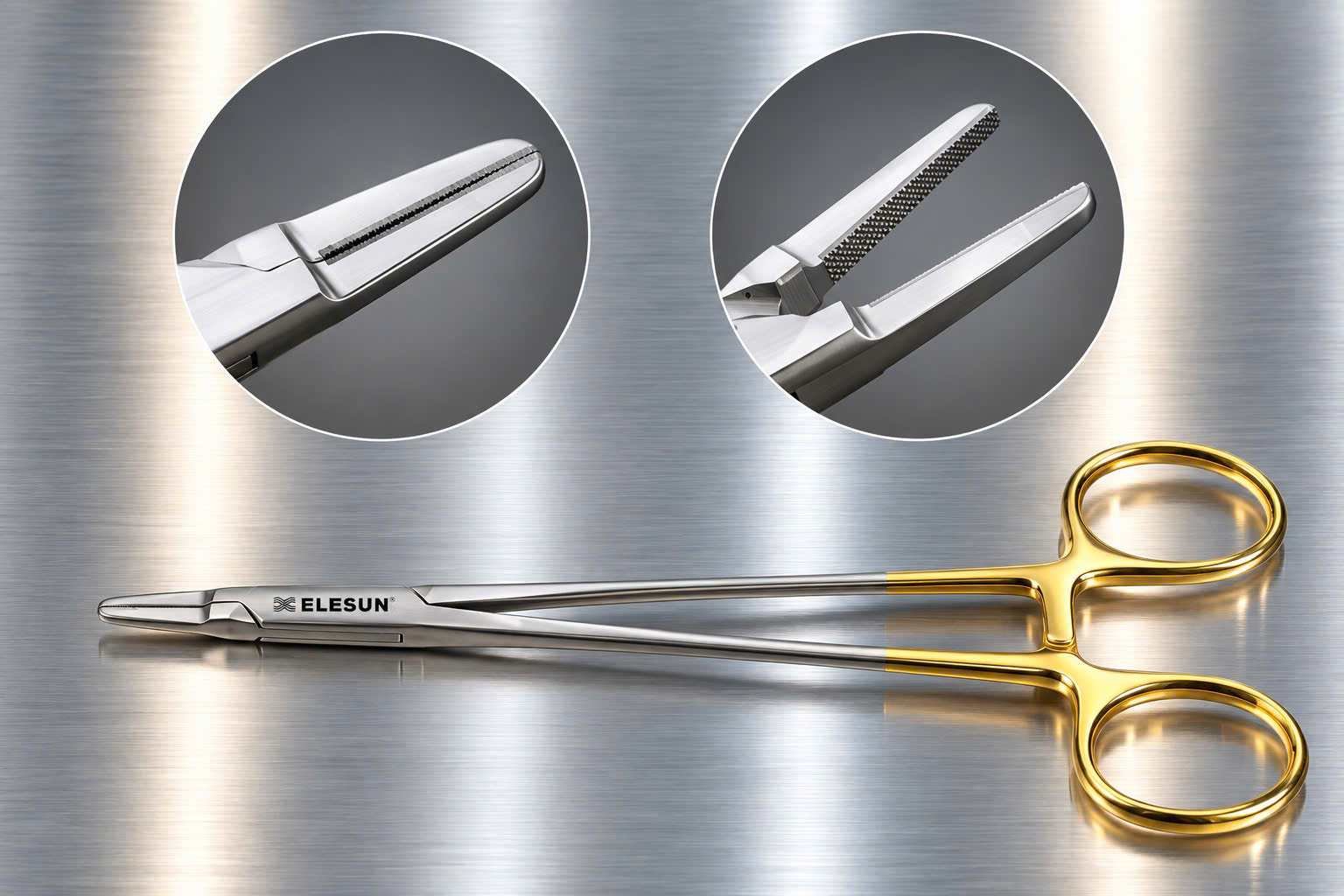
Microvascular needle holders
Microvascular needle holders use a spring handle held in a pencil grip instead of finger rings, with fine jaws for micro needles and sutures. Some designs have a lock that holds the needle without constant finger pressure, others have none; the choice depends on handling preference and the manufacturer's stated intended use.
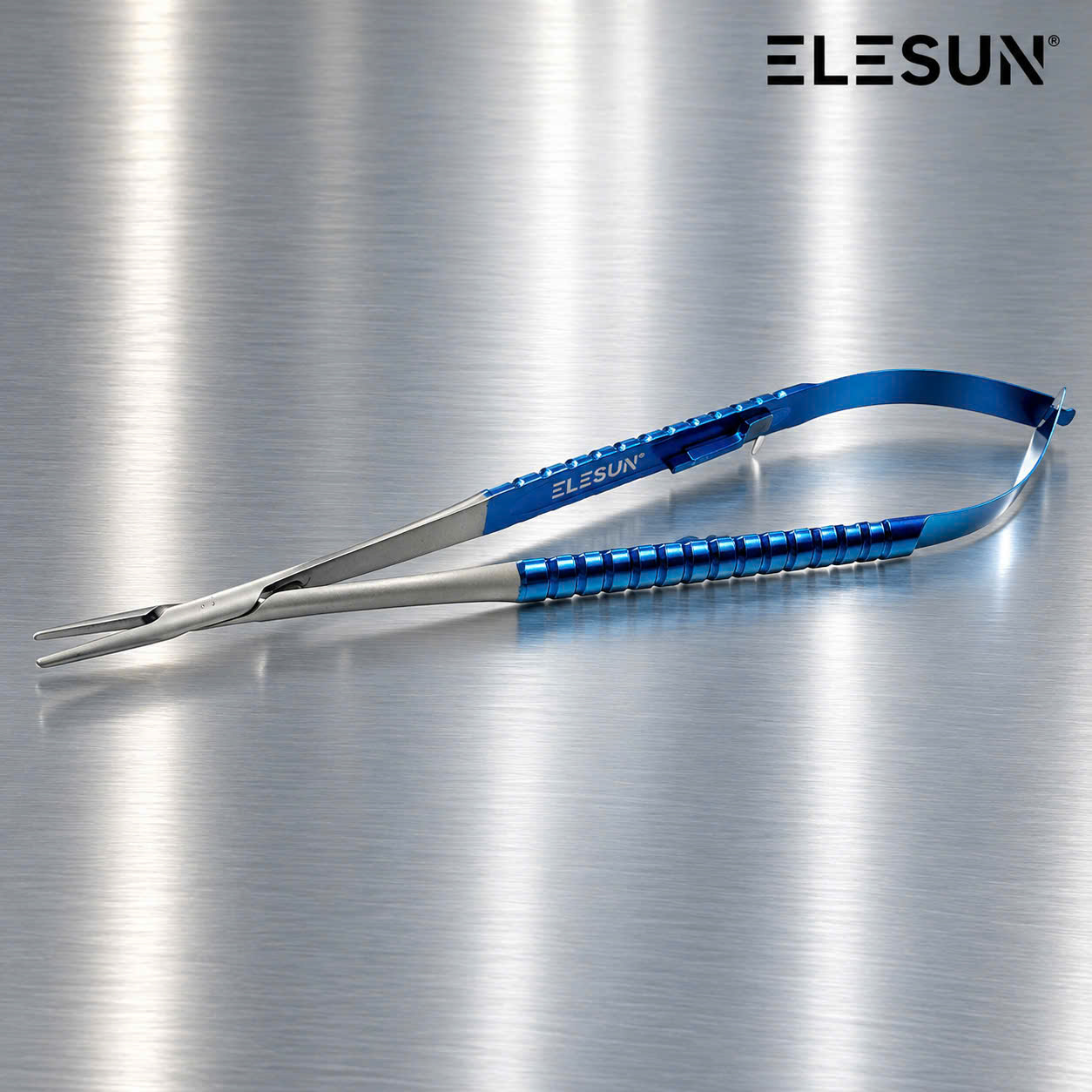
See the long-shank vascular needle holder and the Castroviejo spring micro needle holder in the ELESUN catalog.
7. Fine Microsurgical Forceps
Microsurgical forceps are spring-handled forceps with ultra-fine working tips, used to hold the adventitia of small vessels, hold vessel edges during suturing and handle micro sutures. The shaft, tip and handle architecture of this group is analyzed in detail in the microsurgical forceps guide; this article only summarizes their role in a microvascular set.
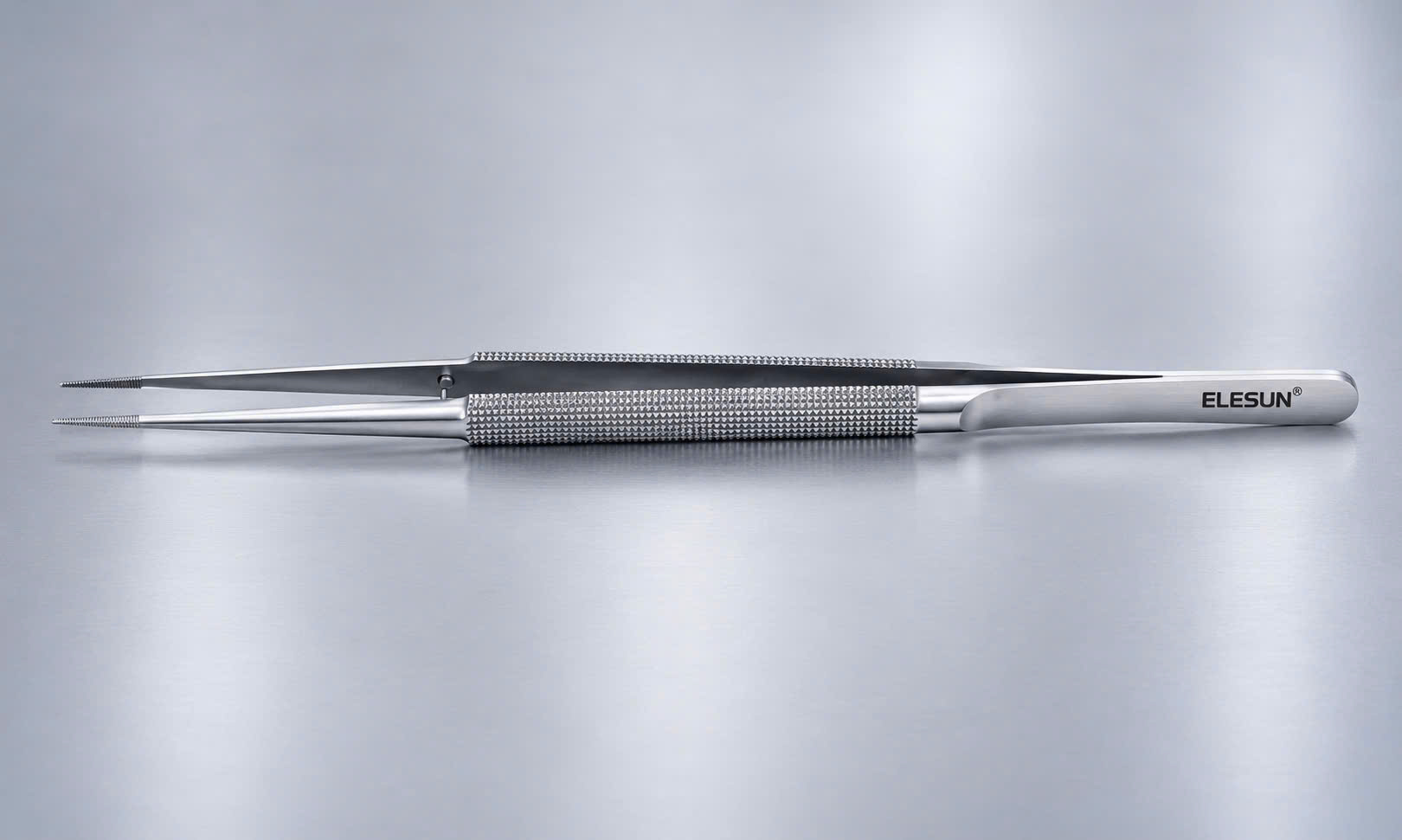
See the round knurled handle micro forceps in the ELESUN catalog.
8. Functional Differences: Cutting, Grasping & Needle Control
Scissors, micro forceps and needle holders can look alike at micro scale, but each group performs a different mechanical function and they are not interchangeable:
| Instrument | Function | Mechanism & grip | Key inspection points |
|---|---|---|---|
| Vascular scissors (Potts-Smith pattern) | Extending the arteriotomy | Pivot joint, finger rings, angled blades | Even cut along the full blade, tips closing in line |
| Dissecting scissors | Separating and cutting perivascular tissue | Pivot joint, finger rings, straight or curved blades | Sharpness, smooth pivot |
| Micro scissors | Cutting on small vessels and micro sutures | Spring handle, pencil grip | Tips not bent, even spring |
| Vascular needle holder | Holding and driving the needle | Pivot joint, finger rings, ratchet | Jaw surface, no needle rotation, ratchet engagement |
| Micro needle holder | Holding micro needles and sutures | Spring handle, with or without a lock | Jaws close fully, lock works evenly |
| Micro forceps | Holding small-vessel tissue and sutures | Spring handle, limbs joined at the end | Tips meet exactly, no deformation |
Using scissors to grasp tissue, or micro forceps to hold a needle, can deform the fine working ends. Each instrument should be used according to the manufacturer's stated intended use.
9. Selection by Procedural Requirement
- Vessel size and magnification: larger vessels use finger-ring scissors and needle holders; small vessels under magnification use spring-handled instruments.
- Field depth: determines shank length and the need for long slender shanks.
- Cutting direction: choose straight, curved or angled blades according to the cut relative to the approach.
- Needle and suture size: needle-holder jaws must be compatible with the intended needle size.
- Pre-purchase evaluation: request samples so surgeons can assess handling, scissor tip closure, needle hold and lock function, and check the IFU against the central sterile services department's capabilities.
Fine scissor blades and micro instrument tips are easily damaged by impact, so they should be protected during transport, cleaning and packaging according to the IFU. General principles are summarized in the surgical instrument reprocessing, cleaning and sterilization guide.
For cleaning, disinfection, and sterilization, follow the applicable manufacturer's IFU and the healthcare facility's validated reprocessing procedures.
10. Frequently Asked Questions
How do Potts-Smith-pattern scissors differ from standard dissecting scissors?
Potts-Smith-pattern scissors have two small, fine blades angled to the shank axis and long slender shanks, and are used to extend the arteriotomy along the vessel axis. Standard dissecting scissors have straight or curved blades used to separate and cut perivascular connective tissue. Blade angle and length of Potts-Smith scissors vary between models, so the manufacturer's documentation should be checked for each instrument code.
When are straight, curved or angled scissor blades chosen?
The choice depends on the direction of the cut relative to the approach. Straight blades cut along the shank axis; curved blades keep the tips visible and follow curved tissue surfaces during dissection; angled blades place the cutting plane off the shank axis, suited to cutting along the vessel wall in a confined space. The final decision rests with the surgeon according to the anatomical site and approach.
How do microsurgical scissors differ from standard vascular scissors?
Microsurgical scissors are used on small vessels under loupes or a microscope and usually have a spring handle held in a pencil grip instead of finger rings, with very small blades. This grip translates wrist movement into small, stable finger movements (Matsumura, 2012). Standard vascular scissors have finger rings and a pivot joint and are used on larger vessels and perivascular tissue.
How do locking and non-locking micro needle holders differ?
A locking micro needle holder holds the needle closed without the surgeon maintaining constant finger pressure. A non-locking version opens and closes continuously under finger pressure alone. Neither is right for every case; the choice depends on the surgeon's handling preference, needle size and the manufacturer's stated intended use.
Why should micro forceps not be used to hold suture needles?
Micro forceps are designed to hold tissue and sutures with ultra-fine tips. A suture needle is stiffer than tissue and needs load-bearing jaws so it does not rotate as it passes through the vessel wall, which is why needle holders have their own jaw design. Holding needles with micro forceps can bend or misalign the tips, affecting tip alignment and instrument life.
What should be checked on scissors and needle holders after each reprocessing cycle?
For scissors: even cutting along the full blade, tips closing in line, and a smooth pivot that is not loose. For needle holders: intact jaw surfaces, no needle rotation, and a ratchet or spring lock that works evenly. For micro instruments: tips that are not bent or deformed. Cleaning, disinfection and sterilization must follow the IFU and the facility's validated procedures.
11. Conclusion
Vascular scissors and microvascular instruments complete the set for vessel opening and anastomosis: Potts-Smith-pattern scissors extend the arteriotomy, dissecting scissors expose the vessel, micro scissors and micro forceps work on small vessels, and needle holders control the suture needle. Appropriate selection rests on vessel size, magnification, field depth, cutting direction, needle size and the manufacturer's IFU.
Consult ELESUN on Vascular Scissors & Microvascular Instruments
Explore our vascular instrument catalog, microsurgery instruments and surgical solutions supported by ELESUN technical specialists.
References
- Ailawadi G., Nagji AS., Jones DR. (2010). The legends behind cardiothoracic surgical instruments. The Annals of Thoracic Surgery, 89(5):1693–1700.
- Nolte JE. (1995). A useful modification of the Potts-Smith scissors. Journal of Vascular Surgery, 21(1):167.
- Matsumura N. (2012). A new bayonet spring microsurgical instrument handle with a bar for microneurosurgery. Surgical Neurology International, 3:152 (PMC3551495).
- ISO 7151:2024. Surgical instruments — Non-cutting, articulated instruments — General requirements and test methods. International Organization for Standardization.
- ISO 17664-1:2021. Processing of health care products — Information to be provided by the medical device manufacturer for the processing of medical devices — Part 1: Critical and semi-critical medical devices.