
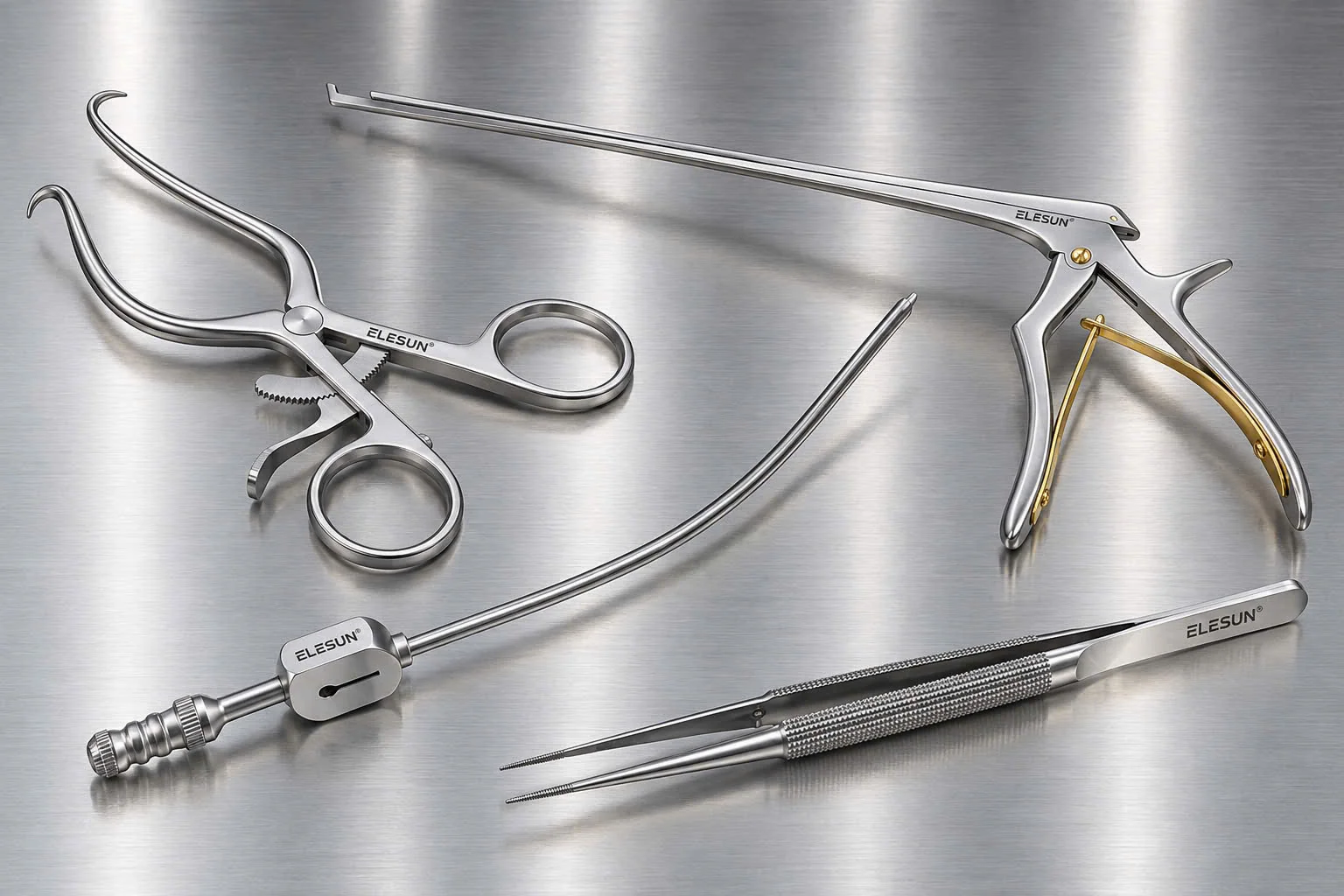
A workflow-based overview of Neuro-Spine instruments for fixation, exposure, decompression, microsurgery, dissection and instrument selection.
Quick Summary (Answer-First): Neurosurgical and spine instruments do not exist as a single rigid set applicable to every operative procedure. Depending on whether a cranial or spinal intervention is performed, the surgical armamentarium encompasses cranial positioning and stabilization devices, retractors, Kerrison bone punches, curettes, dissectors, nerve hooks, pituitary rongeurs, microsurgical instruments, suction cannulas, and specialty access tools. The most effective framework organizes these instruments by operative workflow—from patient positioning and surgical exposure through decompression, dissection, and delicate tissue handling.
Neurosurgery and spine surgery represent clinical specialties where critical operative maneuvers unfold within deep-seated, narrow corridors adjacent to highly sensitive anatomical structures—including the brain parenchyma, spinal cord, nerve roots, dural sac, and delicate cerebrovascular networks. Consequently, a high-performance Neuro-Spine instrument configuration is never a haphazard assembly of standard clamps, scissors, or punches. Rather, every single instrument must correspond precisely to the operative step, spatial corridor, and histological nature of the tissue undergoing manipulation.
In clinical practice, Neuro-Spine sets do not conform to an identical, monolithic configuration. The instrument requirements for craniotomy, spinal decompression, lumbar discectomy, or minimally invasive tubular procedures vary substantially. Instrument configurations for cranial and spine surgery can differ substantially depending on the procedure, surgical approach, operative depth and intended manipulation, as reflected in procedural configurations described by the AO Surgery Reference.
“A distinguished Neuro-Spine instrument system is not created by accumulating numerous tools, but by structuring them in precise alignment with the surgical workflow.”
1. Functional Groups of Neurosurgical and Spine Instruments
In surgical theater practice, cataloging instruments merely by product nomenclature obscures their operational interdependencies. A clinically rigorous approach categorizes Neuro-Spine instrumentation according to primary operative functions:
- Positioning and stabilization: Maintaining rigid skeletal fixation and anatomical stability throughout lengthy microscopic procedures.
- Surgical exposure: Establishing and maintaining atraumatic access corridors to deep operative sites without compromising surrounding muscular and neural tissues.
- Bone work and decompression: Resecting lamina, osteophytes, and hypertrophic ligaments to alleviate neural compression.
- Soft tissue microsurgery: Performing precision dissection, micro-cutting, and micro-coagulation beneath high-magnification surgical operating microscopes.
- Dissection and exploration: Defining anatomical planes, separating dural interfaces, and mobilizing delicate nerve roots.
- Tissue and disc handling: Grasping and extracting herniated intervertebral disc fragments or soft tissue masses in confined spaces.
- Surgical field control: Evacuating blood and irrigation fluids while maintaining an uncompromised line of sight.
- Procedure-specific spinal systems: Tubular retractor systems, depth gauges, pedicle probes, and implant insertion drivers.
Functional classification provides greater clinical utility than isolated product memorization. A Kerrison rongeur, ball-tip nerve hook, or pituitary rongeur achieves genuine clinical efficacy only when deployed within the specific surgical maneuver it was engineered to perform.
2. Cranial Fixation & Positioning
Some cranial neurosurgical procedures require a cranial fixation system to maintain stable head positioning throughout surgery.
The ELESUN Mayfield Skull Clamp belongs to the cranial stabilization instrument group, combining a skull clamp, fixation pins and adjustable positioning components to support head fixation according to the surgical approach and procedural requirements.
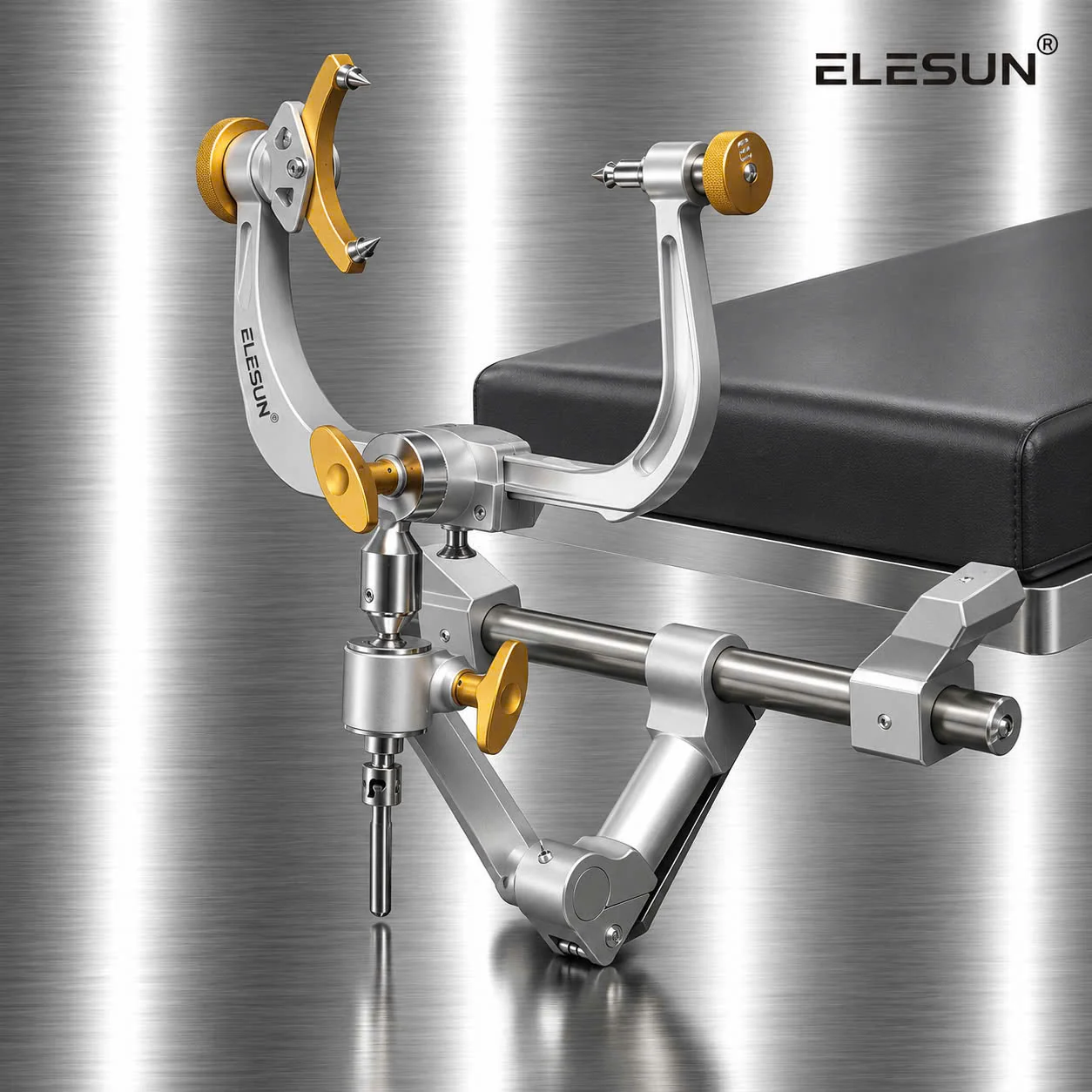
Within the broader Neuro-Spine workflow, cranial fixation should not be viewed as an isolated accessory. It forms part of the sequence:
positioning → stabilization → exposure → surgical access → manipulation
Selection should consider clamp configuration, fixation pins, positioning adjustability, connection mechanisms and compatibility with the intended procedure. A dedicated article on the ELESUN Mayfield Skull Clamp will be developed later within the Neuro-Spine content cluster.
3. Surgical Exposure and Corridor Maintenance
Following rigid patient positioning, the operative sequence shifts to creating and maintaining a suitable surgical corridor. Within the restricted confines of cranial and spinal surgery, exposure necessitates a delicate balance between wide visibility and minimal tissue disruption.
This instrument group encompasses:
- Self-retaining and handheld wound retractors
- Malleable brain spatulas in diverse widths and configurations
- Specialized nerve-root retractors
- Tubular and speculum retractors designed for minimally invasive corridor access
- Articulated table-mounted holding arms providing stable hands-free retraction
Standardized cranial configurations incorporate diverse retractors, brain spatulas, and holding devices. In minimally invasive spinal surgery, the AO Surgery Reference documents tubular retractors deployed sequentially to dilate paraspinal musculature along muscle-splitting corridors. Retractor design extends beyond simple distraction: blade width, curvature, shaft length, working angles, and line-of-sight clearance directly determine surgeon dexterity in deep operative fields.
4. Bone Work and Spinal Decompression
Bone preparation and decompression represent the mechanical core of spine surgery and craniotomy access. The clinical objective is the controlled removal of osseous structures and hypertrophic ligaments compressing the thecal sac and exiting nerve roots.
Essential instruments in this category include:
- ELESUN Kerrison Rongeur (bone punches)
- Straight and curved bone rongeurs
- Spinal curettes (straight, angled, forward-, and backward-cutting)
- Osteotomes and bone chisels
- High-speed surgical burrs
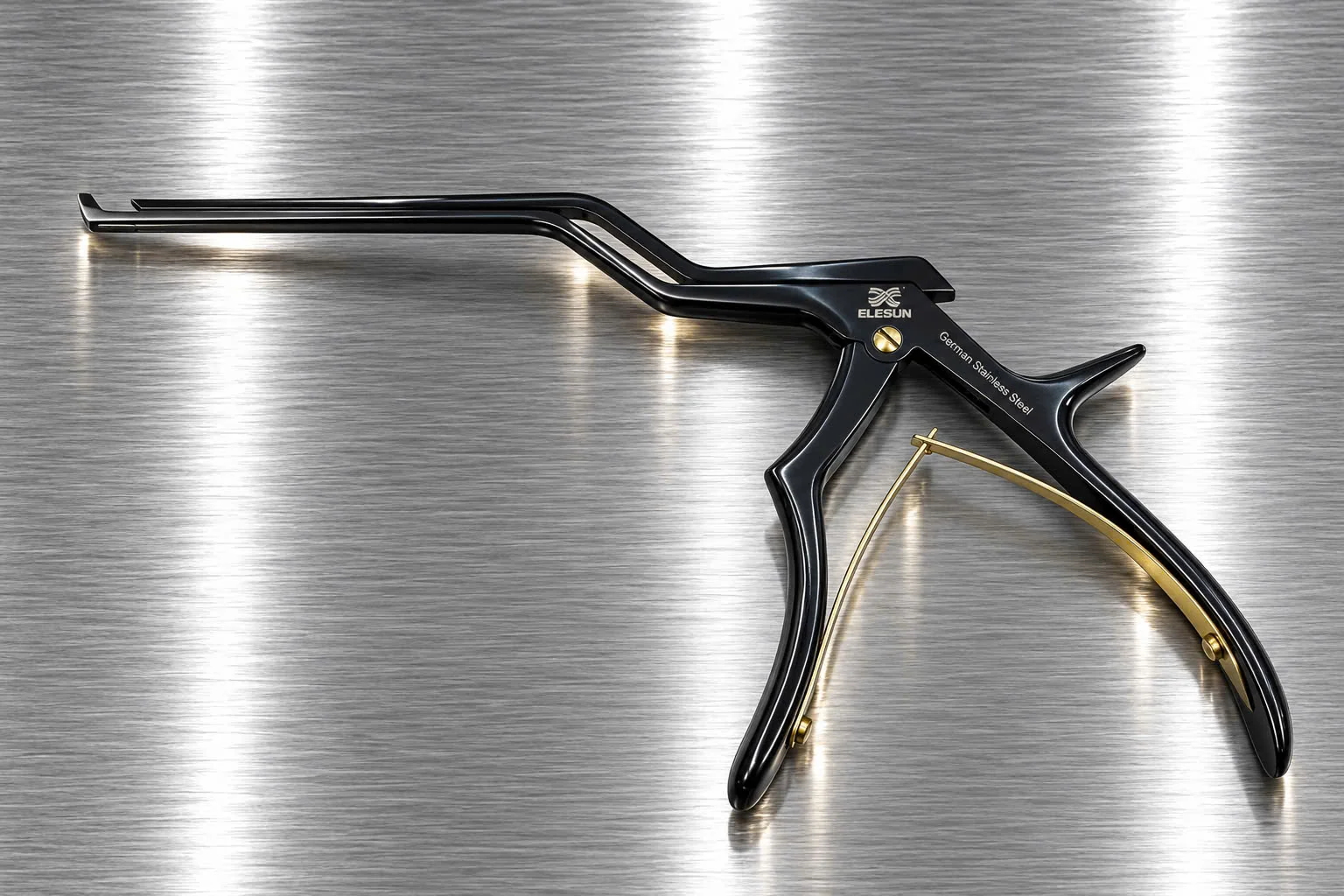
In decompression workflows detailed by the AO Surgery Reference, Kerrison rongeurs operate in close coordination with high-speed burrs, curettes, nerve hooks, pituitary rongeurs, nerve-root retractors, and micro-suctions. Microscopic tubular procedures frequently require Kerrison punches in multiple bite sizes (1 mm to 5 mm) and working angles (40° or 90°, up-biting or down-biting).
Each tool serves a specialized purpose. High-speed burrs thin cortical bone with high precision. Curettes plane bone margins and liberate ligamentous insertions. Kerrison punches utilize a sliding guillotine punch mechanism to excise bone and ligamentum flavum without compromising the underlying dura mater resting beneath the thin footplate. When selecting Kerrison punches, surgical teams must evaluate bite size, working angle, shaft length, footplate thickness, mechanical leverage, and ergonomic grip control.
5. Soft Tissue Microsurgical Instruments
When operative maneuvers transition from rigid osseous structures to the dura mater, spinal cord, cranial nerves, and microvascular networks, instrument requirements shift fundamentally. Sub-millimeter tip precision, tactile feedback, and atraumatic handling become paramount.
This group includes:
- Microsurgical forceps with ultra-fine grasping tips (ring-tip, platform, serrated)
- Microsurgical scissors (straight, curved, sharp, and blunt micro-blades)
- Delicate micro-dissectors and micro-curettes
- Micro nerve hooks
- Bayonet-shaped instruments providing unobstructed visual corridors
- Bipolar coagulating forceps for localized micro-hemostasis
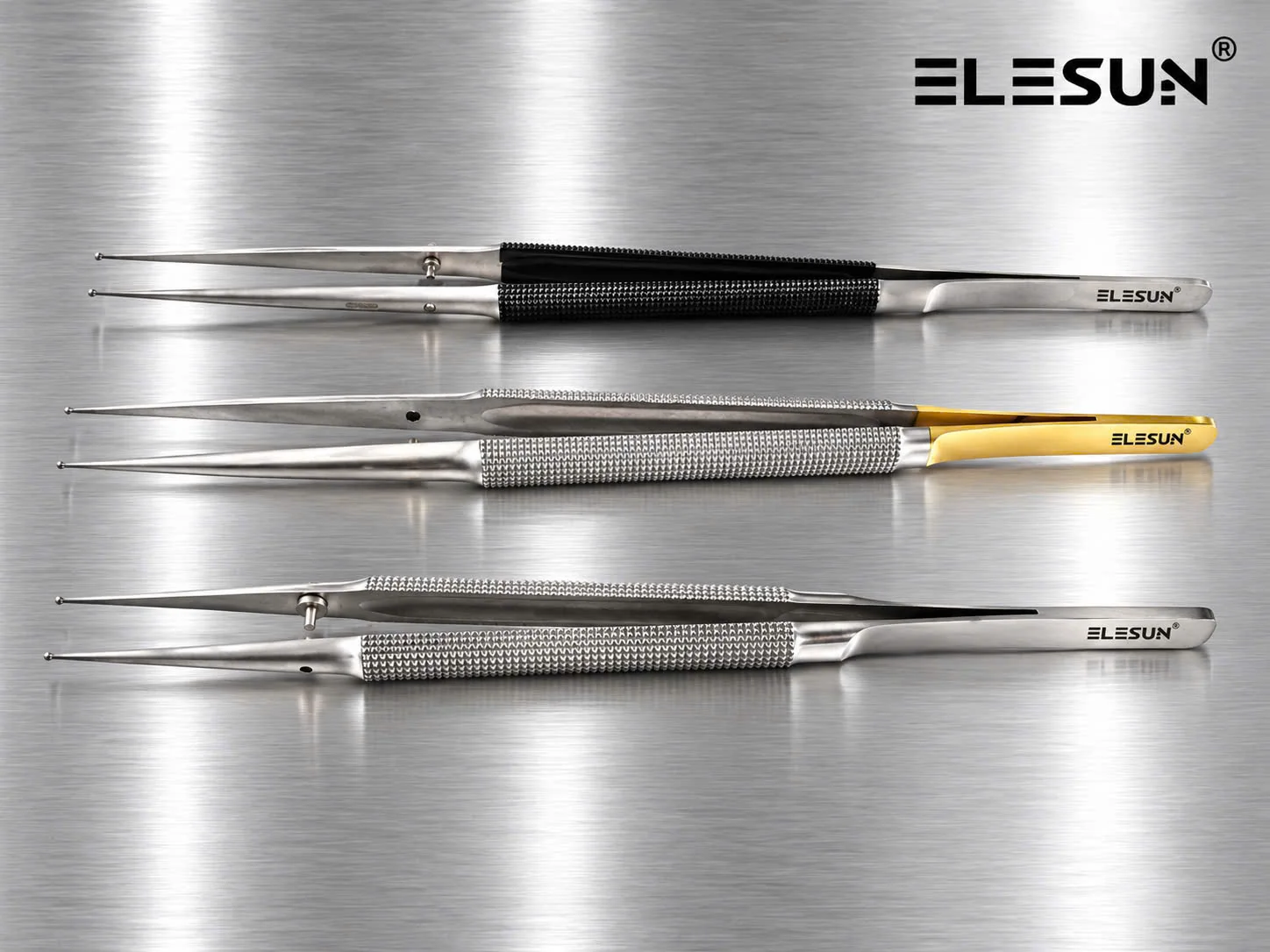
Neurosurgical microsurgical instruments encompass microsurgical forceps, microsurgical scissors, delicate dissectors, micro hooks, bayonet instruments, suction cannulas, and bipolar instruments aligned with procedural workflows. Within micro-cutting instruments, the iconic Yasargil titanium micro-scissors represent an established bayonet standard, offsetting the surgeon's hand from the optical corridor beneath surgical microscopes.
For microsurgical tools, nominal length is only one parameter. Crucial factors include working tip geometry, jaw closure alignment, shaft profile, balanced spring tension, tactile feedback, and complete optical clearance under surgical magnification.
6. Dissectors, Penfield Instruments, and Nerve Hooks: Controlled Exploration
Although modest in physical dimensions, dissectors and nerve hooks, alongside Penfield instruments, fulfill vital roles in Neuro-Spine workflows. They serve as tactile extensions of the surgeon's hand, safely identifying anatomical planes and exploring critical tissue boundaries.
The AO Surgery Reference highlights the routine deployment of Penfield dissectors or micro-curettes during the detachment of ligamentum flavum, blunt ball-tip instruments to define the cleavage plane between ligament and thecal sac, and nerve-root retractors to gently mobilize and shield nerve roots during discectomy or decompression.
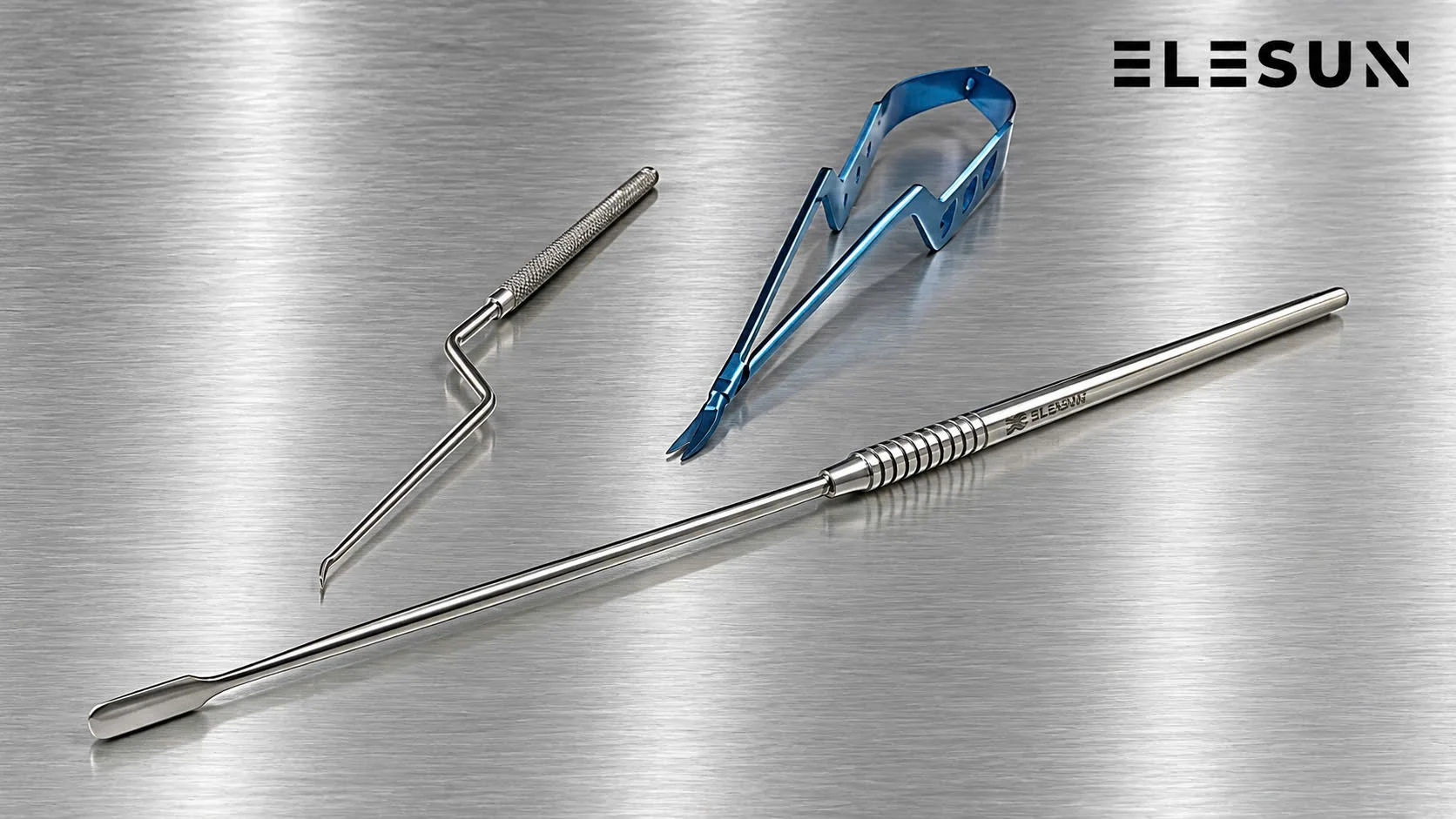
The clinical utility of this group resides in the working end geometry. Subtle differences in tip curvature, blade width, ball-tip diameter, and shaft angle determine whether an instrument can safely negotiate deep corridors without causing dural tears. Thus, selecting dissectors requires rigorous evaluation of working tip geometry and intended tissue manipulation.
7. Tissue and Intervertebral Disc Handling
Pituitary rongeurs represent the quintessential instrument for tissue and intervertebral disc management. In microscopic lumbar discectomy procedures, the AO Surgery Reference describes pituitary rongeurs deployed to grasp and remove loose disc fragments once the annular window or ligamentous defect has been opened.
Pituitary rongeurs operate in close coordination with Kerrison punches, curettes, nerve hooks, retractors, burrs, and suctions across spinal decompression sequences. This reinforces the core principle: surgical instruments must be understood through their functional synergy within the procedural sequence, rather than evaluated in isolation.
8. Surgical Field Suction and Fluid Management
Suction cannulas in neurosurgical and spine procedures serve far beyond fluid evacuation. In deep and narrow corridors, suction tips act as dynamic retraction aids, gently deflecting soft tissue, clarifying microvascular planes, and maintaining an uncompromised operative field.
The AO Surgery Reference lists suction cannulas as essential components across microscopic tubular spine workflows. In cranial neurosurgery, standardized instrument trays combine multiple suction lumen diameters alongside bipolar coagulating forceps to maintain immediate hemostatic control. Key considerations when selecting suction instruments include lumen diameter, working length, tip geometry (atraumatic designs preventing dural invagination), shaft curvature, and ergonomic thumb-port suction regulators.
9. Dedicated Instrument Configurations for Spine Workflows
Spinal procedures do not share an identical instrument configuration. For instance, in microscopic and minimally invasive spine workflows detailed in the AO Surgery Reference, standard configurations feature an orchestrated array of:
- Tubular retractor systems with progressive dilators
- Kerrison rongeurs across multiple bite sizes and angles
- Straight and angled pituitary rongeurs
- Ball-tip nerve hooks and Penfield dissectors
- Specialized spinal curettes
- Nerve-root retractors for neural defense
- High-speed bone burrs
- Deep-corridor suction cannulas
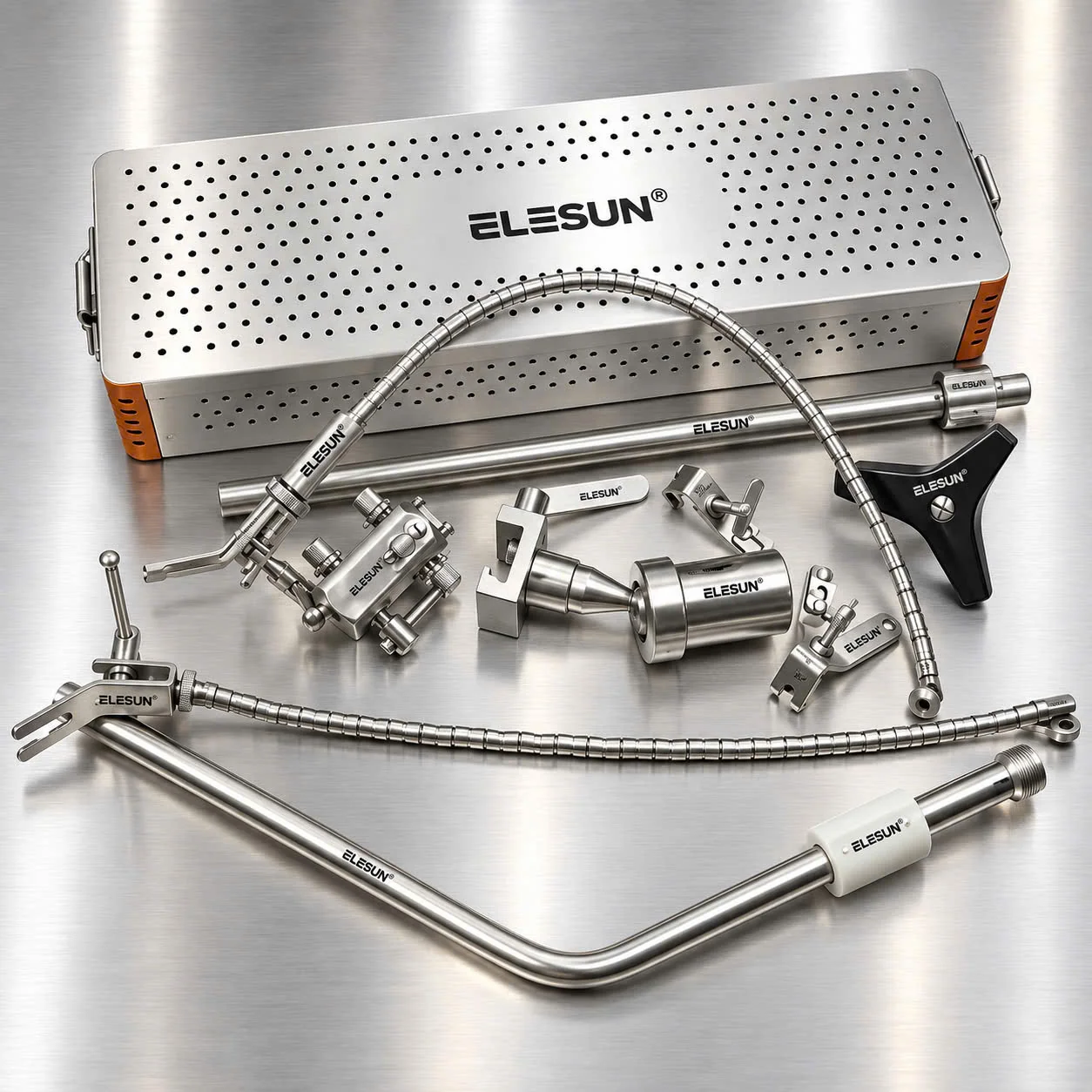
Distinct procedures necessitate distinct instrument ensembles. Consequently, the term “spine instrument set” should never be perceived as a rigid checklist universally applied to every hospital or case. An optimal setup originates from the procedure type, surgical corridor, operative depth, exposure demands, and operative sequence.
10. Technical Criteria for Selecting Neuro-Spine Instruments
When evaluating Neuro-Spine instrumentation, procurement teams and surgeons must transcend generic product titles and basic alloy labels. A rigorous assessment balances multiple engineering and clinical parameters:
Working tip geometry
Dimensions, profile, delicate sharpness, grasping jaw serrations, and specific suitability for target anatomical tissues.
Shaft geometry
Straight, curved, angled, or bayonet configurations. Bayonet profiles are particularly indispensable in deep or narrow corridors under operative microscopes.
Working length
Must precisely match surgical corridor depth, avoiding excessive length that amplifies physiological tremor or inadequate reach that impairs access.
Control & tactile feedback
Ergonomic handle contours, knurled non-slip grip, and balanced mechanical leverage to ensure fine force modulation during delicate procedures.
Field visibility
Instruments must avoid obstructing optical paths, shadowing deep tissue margins, or creating disruptive glare under intense surgical illumination.
Material & surface finish
Premium surgical alloys (martensitic stainless steel, medical-grade titanium) with anti-reflective, corrosion-resistant, and biocompatible finishes.
Cleaning & sterilization compatibility
Critical for instruments with intricate articulations, narrow lumens, or detachable take-apart mechanisms to ensure thorough hospital reprocessing.
Workflow compatibility
An exceptional standalone tool does not guarantee a successful set. The definitive benchmark is harmonious coordination across the end-to-end surgical sequence.
11. From an Individual Tool to a Unified Surgical System
A single Kerrison punch does not constitute a comprehensive spine surgery armamentarium. Nor does a high-precision micro forceps single-handedly complete a neurosurgical set. The genuine strength of surgical instrumentation resides in sequential harmony across operative stages:
Positioning → Exposure → Bone work / Decompression → Dissection → Tissue handling → Visualization / Hemostasis → Closure
This principle guides ELESUN in curating our Neuro-Spine Microsurgery & Spinal Surgical Instruments: delivering not fragmented item catalogs, but unified instrument groups structured around authentic clinical workflows. Learn more about our specialty-tailored clinical surgical workflow solutions and complete ELESUN surgical instruments portfolio.
Explore Neuro-Spine Surgical Instruments
Discover ELESUN instrument configurations engineered for cranial neurosurgery, microsurgery, and spine procedures according to functional workflows.
12. Frequently Asked Questions Regarding Neuro-Spine Instruments
Are neurosurgical instruments and spine surgical instruments identical?
They share significant overlap but are not identical. While instruments such as micro forceps, suctions, dissectors, Kerrisons, or retractors may appear across both disciplines, cranial surgery and spine surgery impose distinct requirements for patient positioning, surgical corridors, and tissue handling.
What does a standard neurosurgical and spine instrument set include?
There is no single universal set suited for all interventions. Depending on the planned procedure, a configuration may include retractors, Kerrison rongeurs, curettes, dissectors, nerve hooks, pituitary rongeurs, micro instruments, suction cannulas, and procedure-specific tools.
What is the primary function of a Kerrison Rongeur?
The Kerrison is a punch-action instrument commonly utilized in bone work and decompression maneuvers. In spine surgery, Kerrisons are frequently employed to resect the ligamentum flavum and enlarge the decompression zone around the dural sac and nerve roots.
How does a Pituitary Rongeur differ from a Kerrison Rongeur?
The two instruments operate on distinct mechanical principles and serve different operative purposes. In discectomy workflows, pituitary rongeurs are designed to grasp and extract loose disc fragments, whereas Kerrison rongeurs execute punch and cutting actions during bone and ligament decompression.
Why do many Neuro-Spine instruments feature elongated shafts or bayonet geometries?
Elongated shafts and bayonet profiles facilitate access to deep-seated surgical corridors while minimizing line-of-sight obstruction and providing ergonomic clearance beneath operative microscopes.
What key factors should be prioritized when selecting Neuro-Spine instruments?
Clinical teams should simultaneously evaluate working tip geometry, working length, shaft geometry, tactile feedback and control, field visibility, metallurgy, cleaning and reprocessing compatibility, and seamless coordination across the end-to-end operative workflow.
Professional Notice
This technical article is intended exclusively for educational and informational purposes regarding instrument engineering and workflow grouping principles. Device selection, clinical application, reprocessing, and sterilization protocols must strictly adhere to manufacturer Instructions for Use (IFU), approved regulatory filings for specific models, and institutional infection prevention standards.