
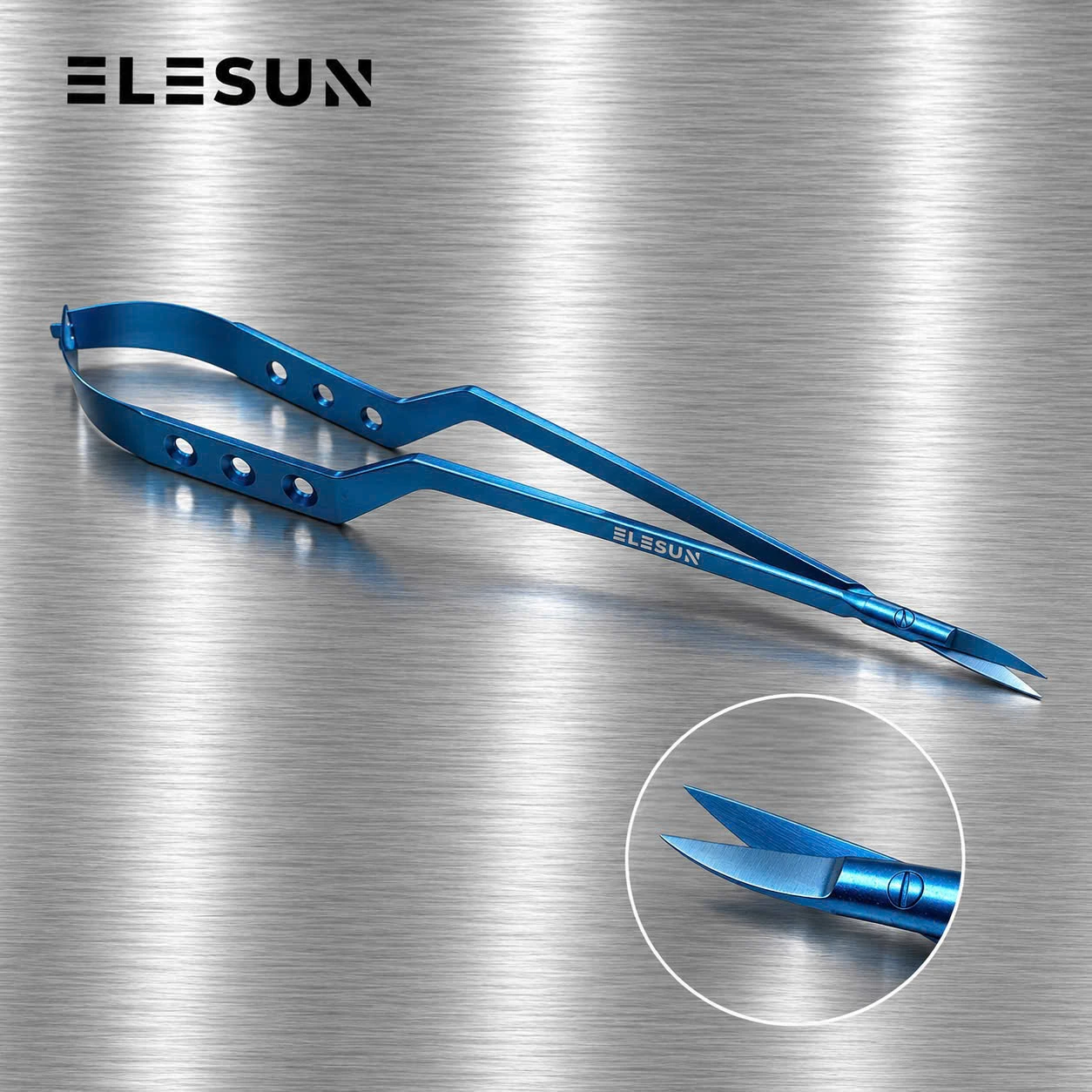
Yasargil Titanium neuro microscissors feature a spring-handle design optimized for microneurosurgery. Learn about titanium properties, 20–22cm configurations, and selection criteria.
References: Content compiled and cross-referenced with neurosurgical training literature from the World Federation of Neurosurgical Societies (WFNS), foundational microneurosurgical monographs by Prof. M. Gazi Yaşargil, and manufacturer technical documentation applicable to each product.
In microneurosurgery, particularly during dissection maneuvers under the operating microscope, precise control of the instrument tip is of paramount clinical importance. Yasargil Titanium Neuro Microscissors feature a distinctive spring-handle design, low weight, and delicate tips, well-suited for microsurgical manipulation within confined corridors.
What criteria define high-quality Yasargil microscissors in surgical practice?
1. What Are Yasargil Titanium Microscissors? Clinical Role in Neurosurgery
Yasargil Titanium Microscissors, commonly referred to in surgical practice as spring-handle microscissors, belong to the specialized class of instruments designed specifically for microsurgery.
The Yasargil design is closely tied to the evolution of modern microneurosurgery and the pioneering work of Professor M. Gazi Yaşargil — representing one of the most familiar and established instrument designs in microneurosurgery.
Unlike standard ring-handle scissors, this instrument employs a spring mechanism in the handle. The surgeon controls blade opening and closing via fine finger movements while maintaining a pen-grip instrument posture.
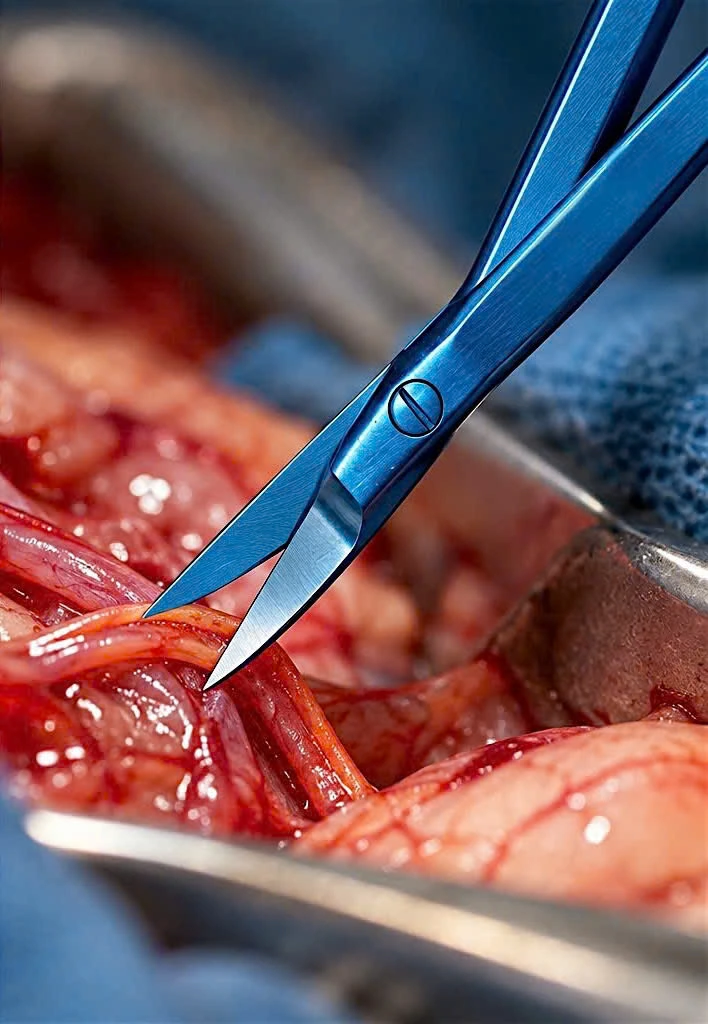
This configuration is especially advantageous for delicate micro-maneuvers under high magnification, such as incising fine membranes, cutting arachnoid trabeculae, or performing targeted sharp microdissection according to surgical indication.
2. Instrument Dimensions and the 22cm Long-Reach Configuration
ELESUN offers 20–22 cm length configurations, suitable for different surgical field depths depending on the specific model.
In microneurosurgery, instrument working length must be selected based on anatomic localization, surgical corridor, and operative depth.
The 22cm Long-Reach configuration is a well-suited choice for surgical scenarios requiring access to deep cranial corridors. The extended shaft helps advance the cutting tips into the operative target while maintaining an unobstructed line of sight and adequate ergonomic clearance between the surgeon's hand and the surgical microscope optics.
Conversely, for shallower operative depths, more compact instrument configurations can afford closer manual control. Working length should therefore be tailored to specific surgical techniques rather than relying on a single uniform dimension for all procedures.
3. Advantages of Titanium Metallurgy in Microsurgical Instruments
The ELESUN Titanium microscissors line features a distinctive anodized blue surface finish across corresponding models.
Low Weight
Titanium has a lower density than stainless steel. In comparable instrument geometries, this property substantially reduces physical instrument weight, supporting surgeon comfort and reducing hand fatigue during prolonged microsurgical procedures.
Low Magnetic Susceptibility
Titanium exhibits remarkably low magnetic susceptibility compared to conventional iron-based steels. However, the operational permissibility of any specific instrument in MRI or intraoperative MRI (iMRI) environments must strictly follow the manufacturer's official MR Safety labeling and Instructions for Use (IFU). Magnetic compatibility should never be assumed solely from material nomenclature.
Corrosion Resistance
Medical titanium alloy provides outstanding corrosion resistance and readily withstands standardized hospital reprocessing cycles when cleaned, disinfected, and steam sterilized in compliance with the manufacturer's IFU.
4. Evaluation Criteria for Microsurgical Precision
Ergonomics and Tactile Force Feedback
The spring-handle allows precise actuating movements with subtle finger flexions. In designs with fenestrated lightweight structures or knurled non-slip surfaces, handle geometry enhances grip security under gloved surgical conditions. The calibrated spring tension directly governs tactile feedback and responsiveness during delicate micro-dissection.
Micro-Tips and Joint Mechanics
For microscissors, the craftsmanship of the blade finish represents a critical operational factor. Key inspection parameters include:
- tip delicacy and profile
- blade alignment and closure concentricity
- box-lock or pivot joint mechanical stability
- honed edge sharpness along the entire cutting length
- tip responsiveness and visibility under microscopic illumination
- straight vs. curved tip geometries aligned with operative technique
Curved tip models allow surgeons to reach and incise tissue across multifaceted approach angles within tight anatomical corridors.
5. ELESUN Microneurosurgical Instrument Ecosystem
Within a comprehensive neurosurgical & spine instruments ecosystem, microscissors are systematically paired with other specialized instrument classes.
Micro Bulldog Vascular Clamps
Micro Bulldog Clamps are utilized in appropriate procedures for temporary occlusion of delicate vascular structures according to surgical indications and technique.
Bipolar Forceps
Bipolar Forceps serve as a cornerstone of microneurosurgery, enabling precise electrocoagulation and gentle tissue handling with compatible bipolar electrosurgical generators.
Rhoton Micro Dissectors and Fukushima Suction Tubes
Specialized Rhoton micro dissectors and Fukushima suction tubes support anatomical dissection, clear visualization, and fluid management within the deep microscopic operative corridor.
Curating a cohesive instrument ecosystem empowers surgical teams to select tailored tools for each operative step while standardizing institutional instrument reprocessing and tray management.
6. Comparison: Titanium vs. Stainless Steel Microscissors
| Characteristic | Yasargil Titanium | Stainless Steel Microscissors |
|---|---|---|
| Material Density & Weight | Lower in comparable design profiles | Generally heavier than titanium |
| Magnetic Susceptibility | Very low; MRI compatibility must follow IFU | Dependent on specific stainless alloy grade |
| Surface Finish | Anodized or anti-glare finish depending on model | Polished, satin, or coating depending on model |
| Corrosion Resistance | High when reprocessed according to IFU | High with compliant surgical-grade steel |
| Length Options | Long-reach versions available depending on model | Broad range depending on manufacturer |
7. Selecting ELESUN Microneurosurgical Instruments
ELESUN Import Export Joint Stock Company provides specialized surgical instrument solutions across medical specialties, including Neurosurgery and Spine.
For specific product models, institutions and clinical specialists may contact ELESUN to obtain:
- detailed technical specifications
- available product configurations
- manufacturer IFU and documentation
- applicable CO/CQ regulatory and quality records
- consultation on sizing and configurations tailored to clinical requirements
ELESUN Neurosurgical Instrument Solutions
Explore our comprehensive catalog of cranial and spine microsurgical instruments.
8. Frequently Asked Questions About Microscissors
How should Titanium microscissors be maintained and cared for?
Never use microscissors to cut non-biological materials or for purposes outside the manufacturer's intended indications. After use, instruments must be meticulously cleaned and reprocessed following the model-specific IFU and the healthcare facility's infection control protocols. Avoid abrasive cleaning agents or rough handling that could compromise delicate tips, honed cutting edges, anodized surfaces, or joint mechanics.
Why is standardization of the microneurosurgical instrument set important?
An instrument system built upon consistent ergonomics and aligned with procedural techniques helps the surgical team maintain a harmonious operative setup, while streamlining hospital sorting, tray assembly, and sterile reprocessing workflows. Final selection must always be based on surgical technique, surgeon preference, and specific device technical parameters.
Professional Notice
The information provided in this article is for educational purposes regarding instrument characteristics and selection criteria. Selection, clinical use, reprocessing, and sterilization of medical devices must strictly adhere to the manufacturer's Instructions for Use (IFU), applicable regulatory documentation, and institutional hospital infection control protocols.
References
- World Federation of Neurosurgical Societies (WFNS) — Neurosurgical Anatomy & Microneurosurgery Educational Resources.
- M. Gazi Yaşargil — Microsurgery: Applied to Neurosurgery, Georg Thieme Verlag.
- M. Gazi Yaşargil et al. — Microneurosurgery, Vol. I–IV, Georg Thieme Verlag.