
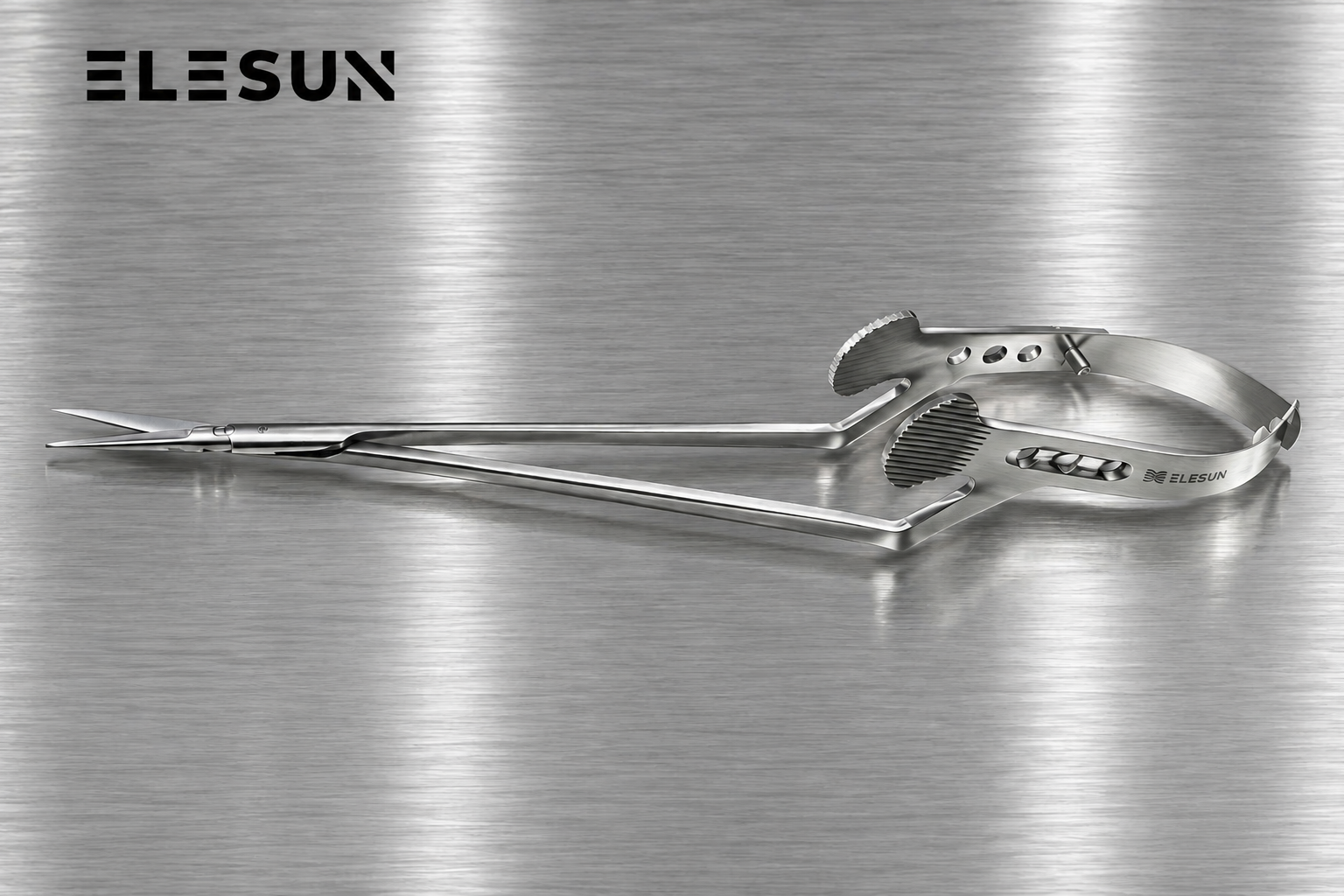
Comprehensive metallurgical guide to surgical instrument materials: comparing Martensitic and Austenitic steels with Titanium alloys under ISO 7153-1, ASTM F899-23, and passivation principles.
Quick Summary: Metallic surgical instruments primarily utilize specialized stainless steel grades (such as Martensitic and Austenitic) and Titanium alloys conforming to applicable material specifications (such as ISO 7153-1 and ASTM F899-23). The corrosion resistance of stainless steel relies on an engineered chromium-rich passive layer verified by standardized test methods including ASTM F1089-24, whereas Titanium alloys form a spontaneous titanium oxide layer, possess significantly lower density, and are non-ferromagnetic. Instrument quality is governed by standardized alloy specifications, controlled heat treatment, precision machining quality, surface finishing, tolerances and mechanical design rather than generalized geographic trade descriptions.
1. Classification of Metallic Materials in Surgical Instrument Fabrication
In surgical instrument manufacturing, metallurgy selection establishes the definitive baseline for mechanical performance, biocompatibility, and fatigue resistance across repeated clinical cycles and reprocessing regimens. From a metallurgical perspective, metallic alloys for surgical instrumentation fall into two primary families: iron-based alloys (stainless steels) and non-ferrous alloys (predominantly Titanium alloys).
International technical standards such as ISO 7153-1 (Surgical instruments — Materials — Part 1: Metals) and ASTM F899-23 (Standard Specification for Wrought Stainless Steels and Other Metallic Alloys for Surgical Instruments) delineate technical requirements for surgical metallic materials. ASTM F899-23 specifies chemistry requirements for wrought stainless steels used for surgical instruments; hardness and heat-treatment values are provided as reference information rather than universal requirements across all applications. Not all industrial corrosion-resistant alloys are suitable for surgical use; alloys operating in operating rooms must withstand substantial mechanical stresses while resisting electrochemical corrosion within bodily fluids and cleaning chemistries pursuant to principles of surgical instrument reprocessing and sterilization.
Classifying steel and Titanium families provides surgical teams and biomedical engineers with clarity regarding structural load limits, surface hardness, and physical behavior across specific clinical environments.
2. Surgical Stainless Steels: Martensitic vs. Austenitic Properties per ISO 7153-1 & ASTM F899-23
Stainless steel remains the foundational material in surgical instrument engineering. Under the crystallographic classifications standardized in ISO 7153-1 and ASTM F899-23, two principal alloy families serve distinct functional roles: Martensitic steels and Austenitic steels:
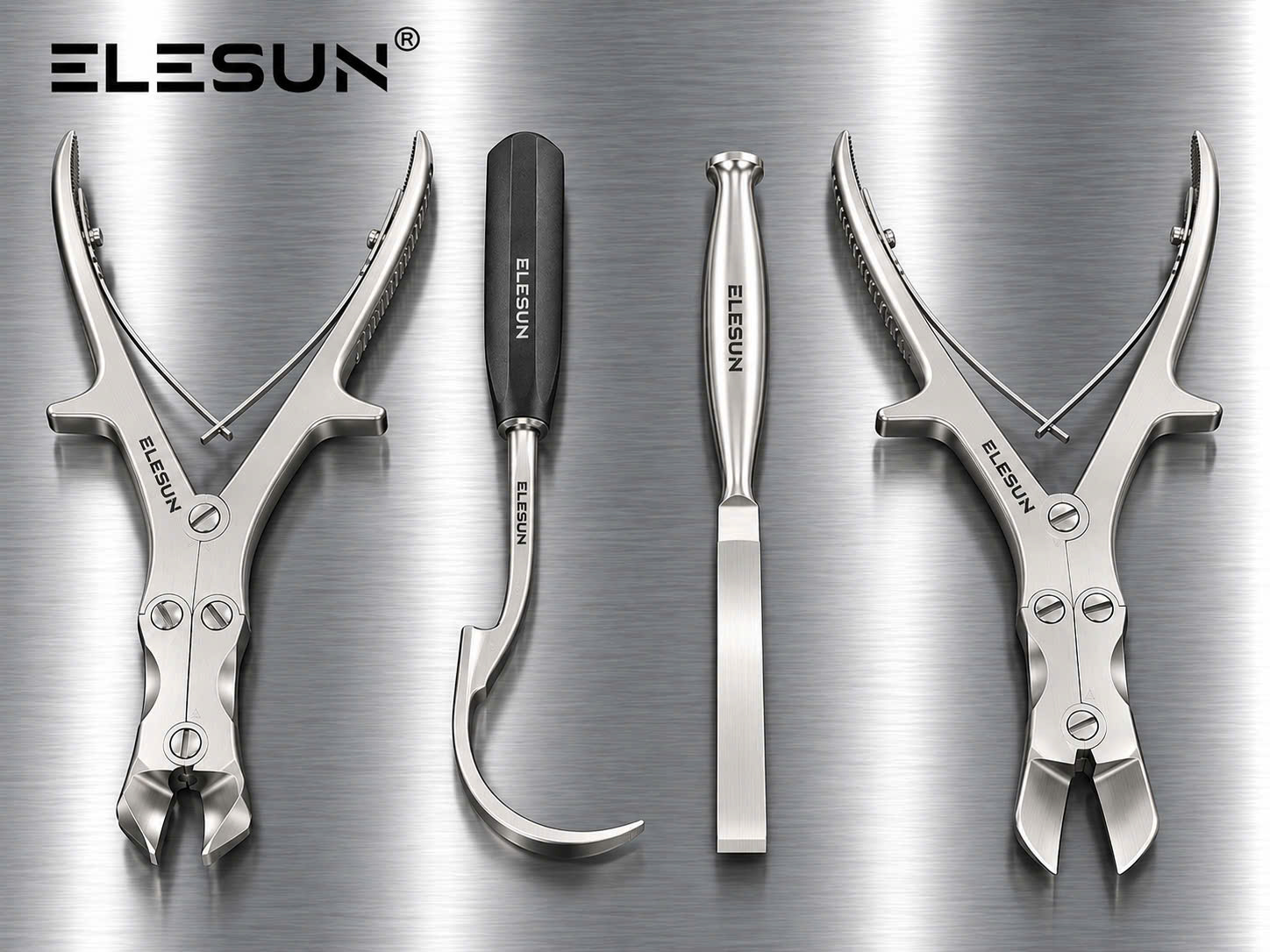
- Martensitic Stainless Steels (400-series grades such as 410, 420, 440): Characterized by higher carbon concentrations (typically 0.15% to over 1.0%) with 11.5% to 18% chromium content. The core attribute of Martensitic grades is their responsiveness to thermal hardening (quench and temper) to achieve high mechanical hardness (typical hardness values commonly reach approximately 45 to 55+ HRC depending on the specific alloy grade and reference heat treatment parameters). Consequently, Martensitic steel is specified for cutting edges, osteotomes, bone chisels, and rongeur jaws requiring wear resistance and edge retention. However, increased carbon content yields comparatively lower baseline chemical corrosion resistance compared to Austenitic grades unless proper surface finishing and passivation integrity are maintained.
- Austenitic Stainless Steels (300-series grades such as 304, 316, 316L): Formulated with chromium (16-18%) combined with nickel (8-14%) and molybdenum additions (in 316/316L). The face-centered cubic (FCC) crystal structure grants Austenitic steels superior chemical corrosion resistance and non-ferromagnetic behavior in the annealed condition. These grades cannot be hardened through heat treatment and rely on cold work for tensile strength increases. Austenitic steels are primarily utilized for instrument handles, retractor blades, sterilizing trays, non-cutting tissue forceps, and components demanding high ductility and corrosion defense.
3. Distinguishing Technical Alloy Specifications from Geographic Origin Descriptions
In surgical equipment procurement, geographic commercial descriptions such as “German stainless steel,” “Japanese steel,” or “French steel” are widespread marketing terms. However, sound materials engineering requires a clear distinction between commercial country-of-origin labels and verified metallurgical specifications.
A geographic name generally represents a commercial trade description of origin or sourcing mill, rather than defining the comprehensive quality of a finished device. In contrast, actual clinical performance, hardness retention, and mechanical durability depend concurrently upon the standardized alloy specification (governing verified chemical composition under applicable consensus standards) and comprehensive manufacturing process controls:
- Melt Refining and Raw Material Cleanliness: Microstructural grain uniformity, non-metallic inclusion limits, and gas porosity reduction during ingot formation.
- Controlled Heat Treatment: Austenitizing temperatures, quenching media, and tempering cycles that dictate final hardness, impact toughness, and carbide dispersion throughout the matrix.
- Precision Machining Tolerances (CNC / Wire EDM / Precision Grinding): Dimensional tolerances across articulating components, ensuring smooth mechanics in devices such as the ELESUN Kerrison Rongeur.
- Surface Finishing and Passivation Integrity: Optical finishing, mechanical or electrochemical polishing, and uniform chemical passivation establishing a stable chromium-oxide barrier.
- Mechanical Design and Tolerance Control: Optimizing stress distribution and kinematic articulation under surgical operating loads.
Consequently, material test reports certifying compliance with standardized alloy specifications, together with certified manufacturing quality systems, provide far greater engineering validity than regional trade designations alone.
4. Titanium Alloys in Surgical Instruments: Physical Properties and Application Contexts
Alongside surgical stainless steels, Titanium alloys hold a vital role in surgical disciplines requiring high precision, notably microneurosurgery, microvascular surgery, and ophthalmology. Both stainless steel and Titanium alloys rely on the protective mechanism of passive surface oxide films; however, Titanium alloys feature distinct physical and metallurgical characteristics:
- Low Material Density: Titanium possesses a density of approximately 4.5 g/cm³, significantly lighter than standard stainless steels (7.8 to 8.0 g/cm³). This weight difference provides mechanical handling advantages regarding the mass of elongated micro-instruments.
- Spontaneous Passive Oxide Layer: Titanium spontaneously develops an adherent, chemically inert titanium dioxide (principally TiO₂) film upon atmospheric exposure to oxygen, which reforms spontaneously if micro-scratched.
- Very Low Magnetic Susceptibility: Titanium alloys are non-ferromagnetic and demonstrate very low magnetic susceptibility, exhibiting no permanent magnetization under standard clinical conditions.
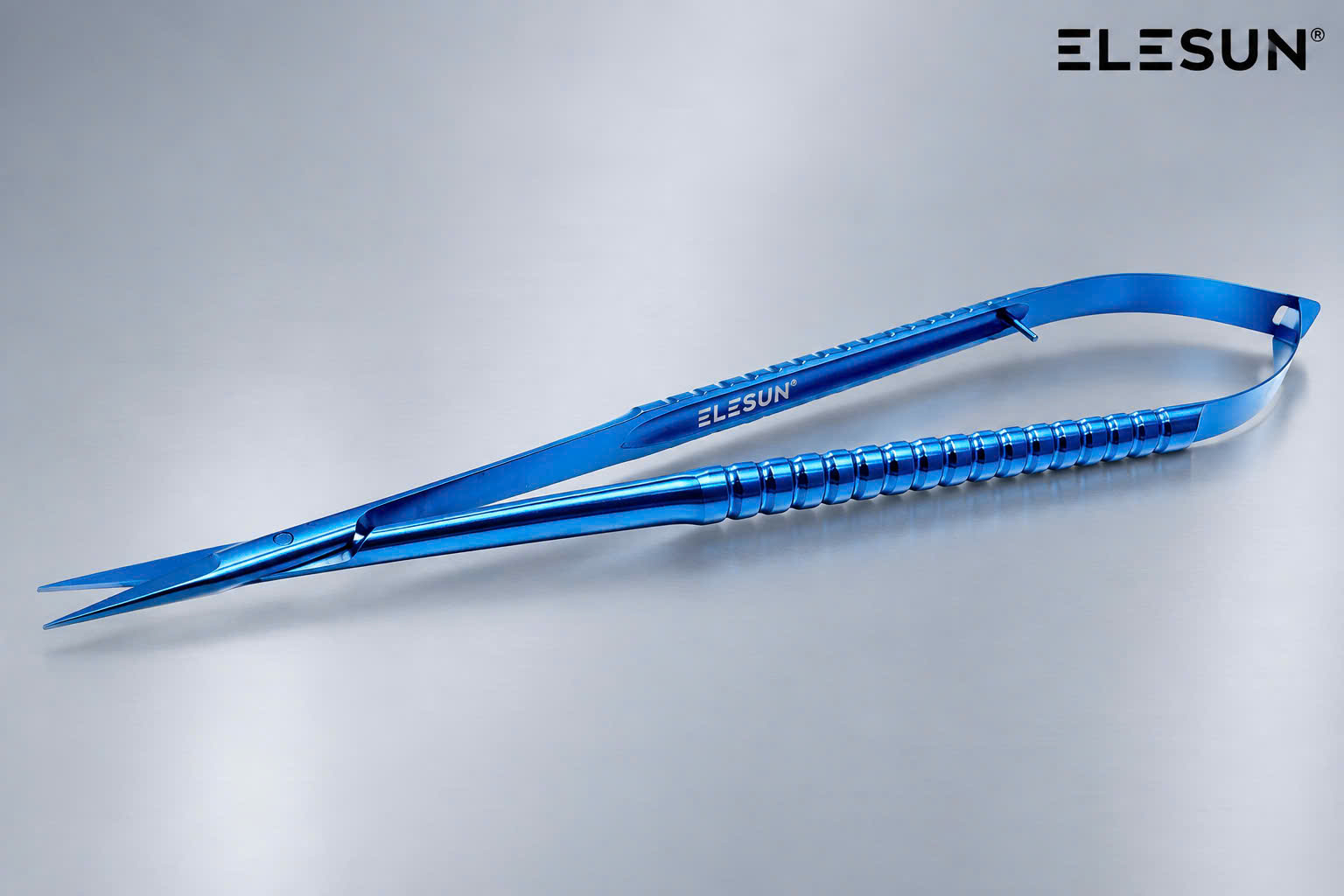
- Anodized Surface Finishing: Titanium instruments may undergo electrochemical anodization to generate distinctive optical identification hues (such as blue or gold) across their surfaces without altering base metal composition.
These physical properties provide appropriate design options for specialized instruments such as Titanium Yasargil Neuroscissors and specialized configurations within the ELESUN Neurosurgical & Spine instrument portfolio. Note that standards such as ISO 5832-3 and ASTM F136 apply specifically to surgical implants rather than reusable surgical hand instruments.
5. Corrosion Resistance, Passive Layers and Testing Under ASTM F1089-24
The term "stainless steel" denotes relative resistance to oxidation rather than an absolute immunity to corrosion across all physicochemical environments. The corrosion resistance of surgical stainless steel depends upon a nanometer-thin, chromium-rich oxide film (Cr₂O₃) spontaneously formed across its surface in the presence of oxygen.
Metallurgically, this passive film acts as a protective barrier insulating the underlying metal substrate from electrochemical oxidation-reduction reactions. When the passive layer experiences mechanical abrasion or hostile environmental conditions without sufficient oxygen to repassivate, localized corrosion mechanisms such as pitting or crevice corrosion can occur.
To evaluate the corrosion resistance of reusable metallic surgical instruments, the standard test method ASTM F1089-24 (Standard Test Method for Corrosion of Metallic Surgical Instruments) establishes standardized surface test protocols:
- Boil Test: Submerges the instrument in boiling distilled water for a defined duration to reveal corrosion susceptibility or localized rust precipitation. This test pathway is appropriately specified for Martensitic stainless steels.
- Copper Sulfate Test: Utilizes an acidified copper sulfate solution to detect free iron on metallic surfaces. This method applies to Austenitic stainless steels (it is not suitable for Martensitic stainless steels due to inherent electrochemical potential differences in the steel matrix).
Note that ASTM F1089-24 evaluations are standardized laboratory corrosion test methods for evaluating surface suitability, rather than an absolute certification of complete passivation or authorization for market release.
6. Material Selection Principles in Surgical Instrument Design
No single metallic alloy fulfills every mechanical requirement across an entire surgical assembly. Surgical instrument engineering requires multi-objective optimization balancing structural loading, clinical context, and decontamination protocols.
The following engineering matrix outlines material allocations across modern surgical instrument design:
| Material Family | Key Mechanical Properties | Limitations / Engineering Trade-offs | Representative Design Context |
|---|---|---|---|
| Martensitic Steel (400-series such as 420, 440) | High hardness post-heat treatment (typically 45-55+ HRC per reference grades), wear resistance, edge retention | Moderate chemical corrosion resistance; sensitive to chloride exposure | Scissor blades, osteotomes, bone chisels, rongeur jaws, cutting clamps |
| Austenitic Steel (300-series such as 304, 316L) | Superior chemical corrosion defense, high ductility, non-ferromagnetic annealed state | Cannot be hardened by thermal treatment; lower yield strength than Martensitic | Handles, retractor blades, sterilization containers, non-cutting tissue forceps |
| Titanium Alloys | Low density (~4.5 g/cm³), natural TiO₂ film, very low magnetic susceptibility | Lower modulus of elasticity than steel; higher raw material and machining costs | Microvascular forceps, deep microsurgical dissecting instruments, micro-scissors |
* Note: The applications listed above represent illustrative design contexts in surgical instrument engineering and do not declare the specific material grade of any individual ELESUN product.
Harmonizing these metallurgical families within unified instrument designs — backed by certified manufacturing quality systems — delivers the operational longevity and clinical dependability evident throughout ELESUN's comprehensive surgical solutions.
Frequently Asked Questions
Can stainless steel surgical instruments rust or corrode?
Yes. "Stainless" describes relative corrosion resistance derived from a surface chromium-oxide passive layer. If this layer is mechanically damaged or exposed to aggressive environments without repassivation, pitting or crevice corrosion can develop.
Are "German steel" or "Japanese steel" independent quality standards?
No. Geographic descriptions such as "German steel" or "Japanese steel" are commercial trade designations regarding origin or raw material sourcing, not independent metallurgical standards. Actual performance and mechanical properties depend upon the standardized alloy specification (such as ISO 7153-1 or ASTM F899-23), controlled heat treatment, and precision manufacturing quality.
How do Titanium instruments differ from stainless steel instruments physically?
Titanium alloys are roughly 40-45% lighter by density than stainless steels, form a natural titanium dioxide film providing high chemical resistance, and have very low magnetic susceptibility. However, Martensitic steels achieve higher ultimate hardness after heat treatment, making them suited for heavy-load cutting edges.
Why do alloy specifications and manufacturing processes matter more than geographic origin?
Geographic labels do not define specific chemical compositions or mechanical hardness. Functional longevity, edge retention, and corrosion defense are determined by standardized alloy chemistry (ISO 7153-1, ASTM F899-23), heat treatment, machining tolerances, and precision surface finishing.
References
- ISO 7153-1:2016. Surgical instruments — Materials — Part 1: Metals. International Organization for Standardization.
- ASTM F899-23. Standard Specification for Wrought Stainless Steels and Other Metallic Alloys for Surgical Instruments. ASTM International.
- ASTM F1089-24. Standard Test Method for Corrosion of Metallic Surgical Instruments. ASTM International.