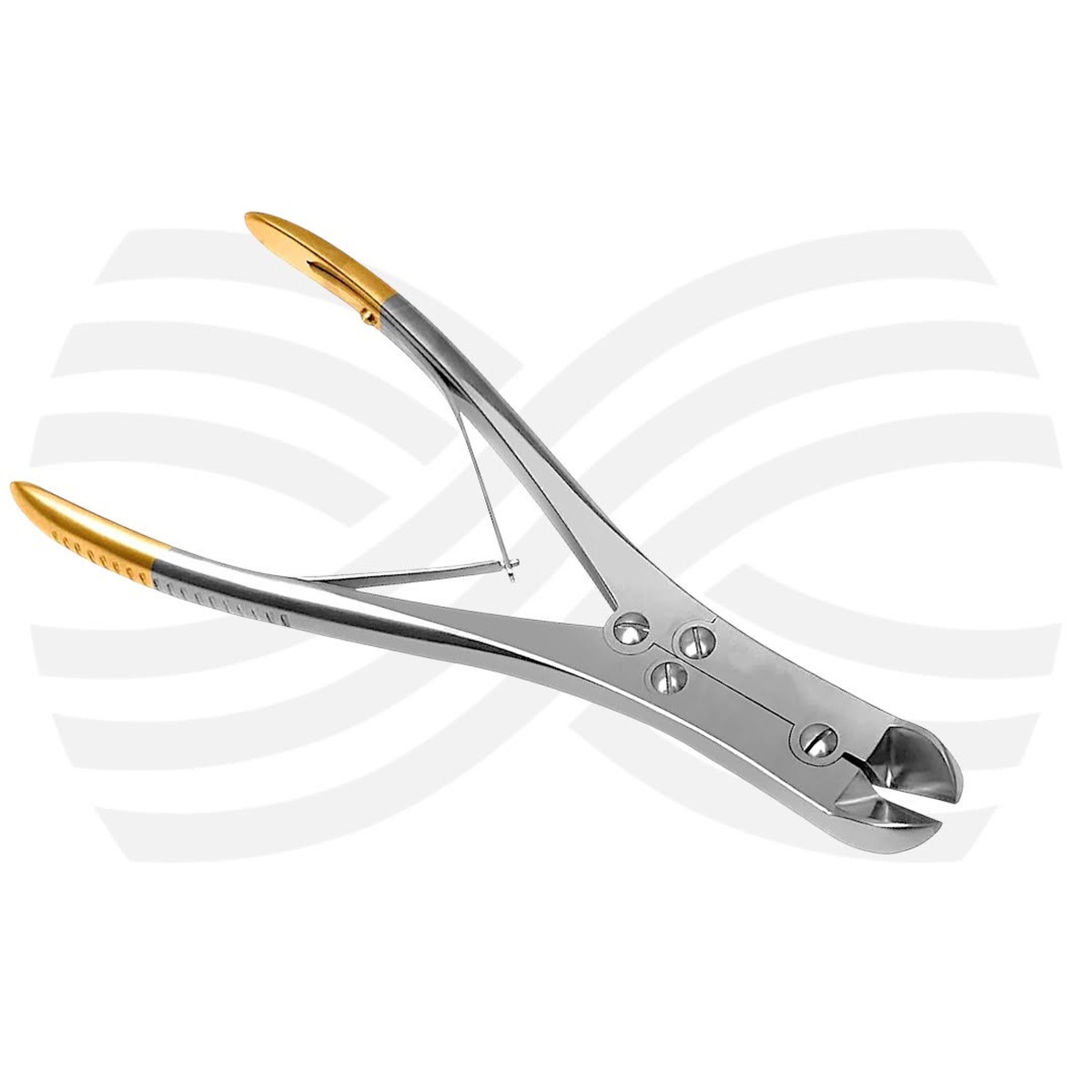
ELESUN Surgical Instrument
Double-Action Pin & Wire Cutter (TC)
Double-action pin and wire cutter with tungsten carbide (TC) cutting inserts.

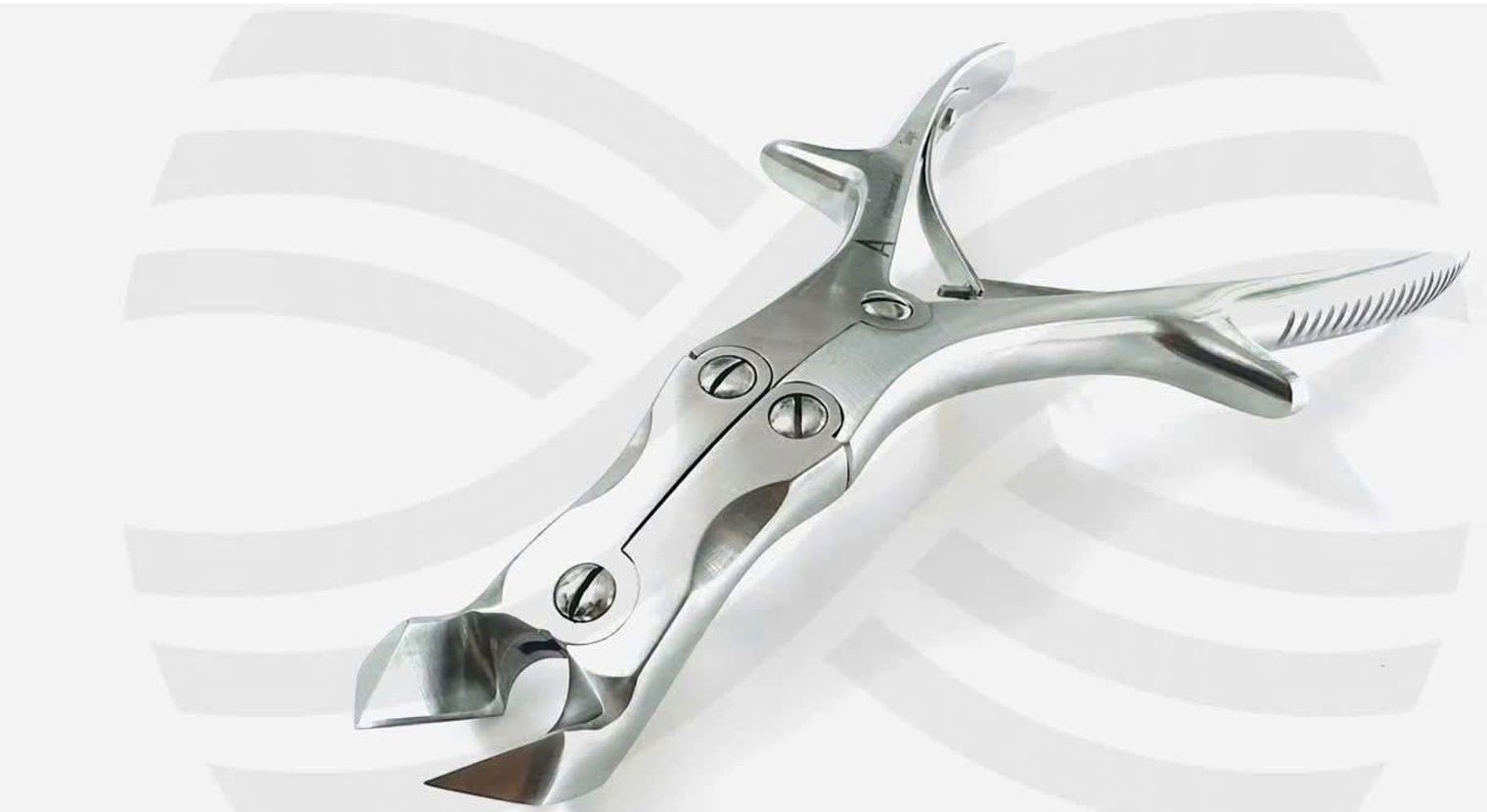
Bone reduction instruments, bone holding clamps, bone cutters, and orthopedic joint instrumentation.
Double-action pin and wire cutter with tungsten carbide (TC) cutting inserts.
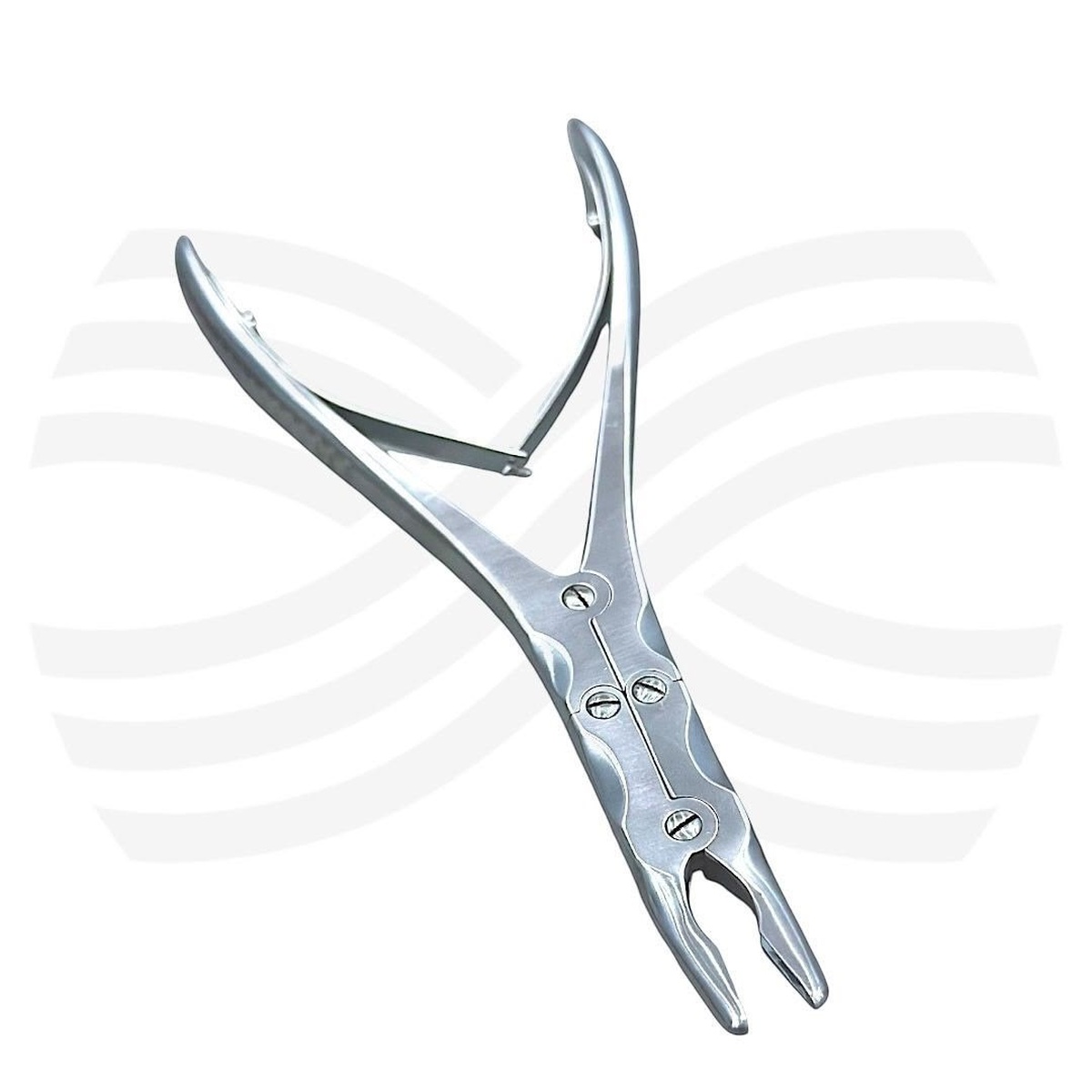
Three-prong bone plate bending pliers for contouring orthopedic plates.
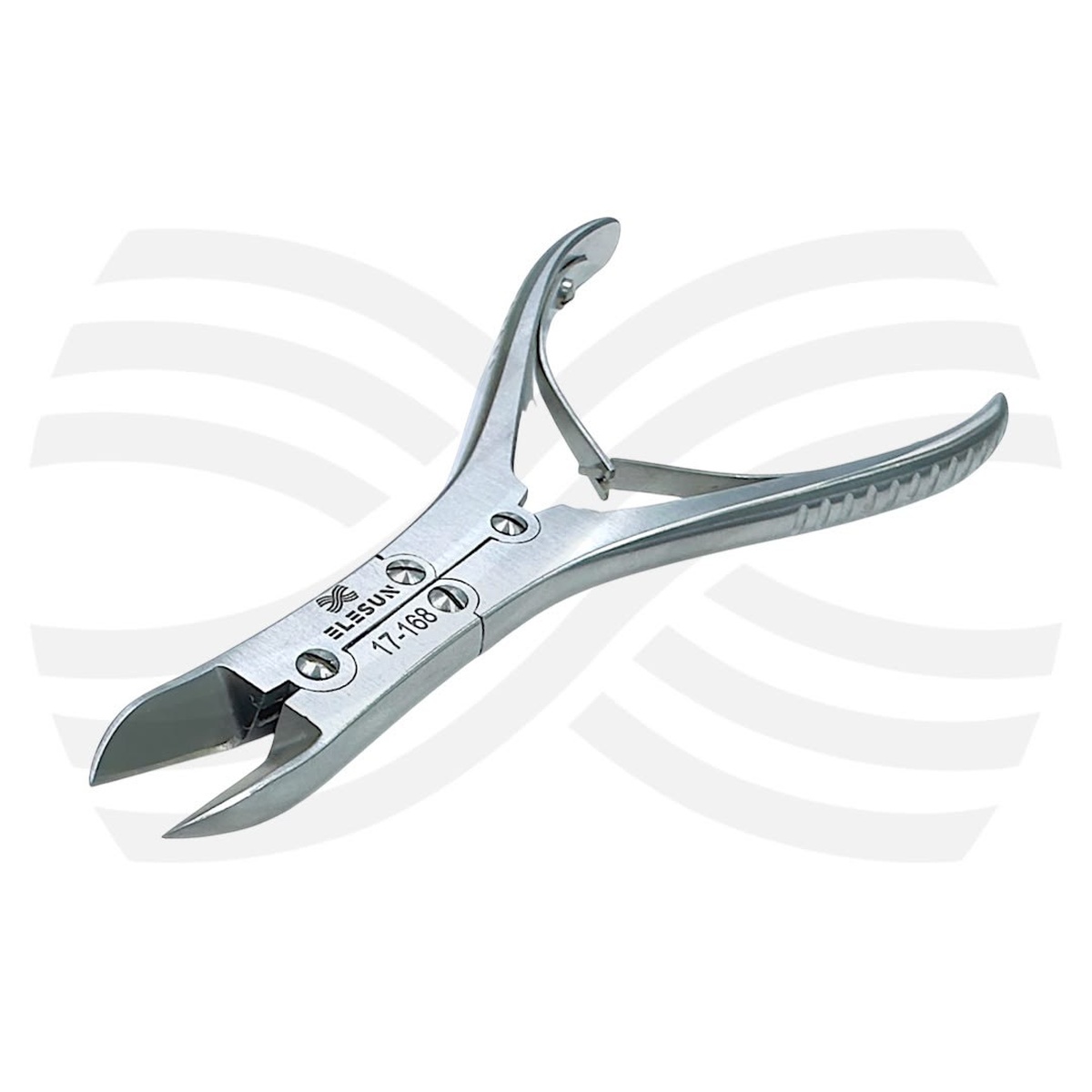
Liston pattern double-action bone cutting forceps with straight beveled cutting blades.
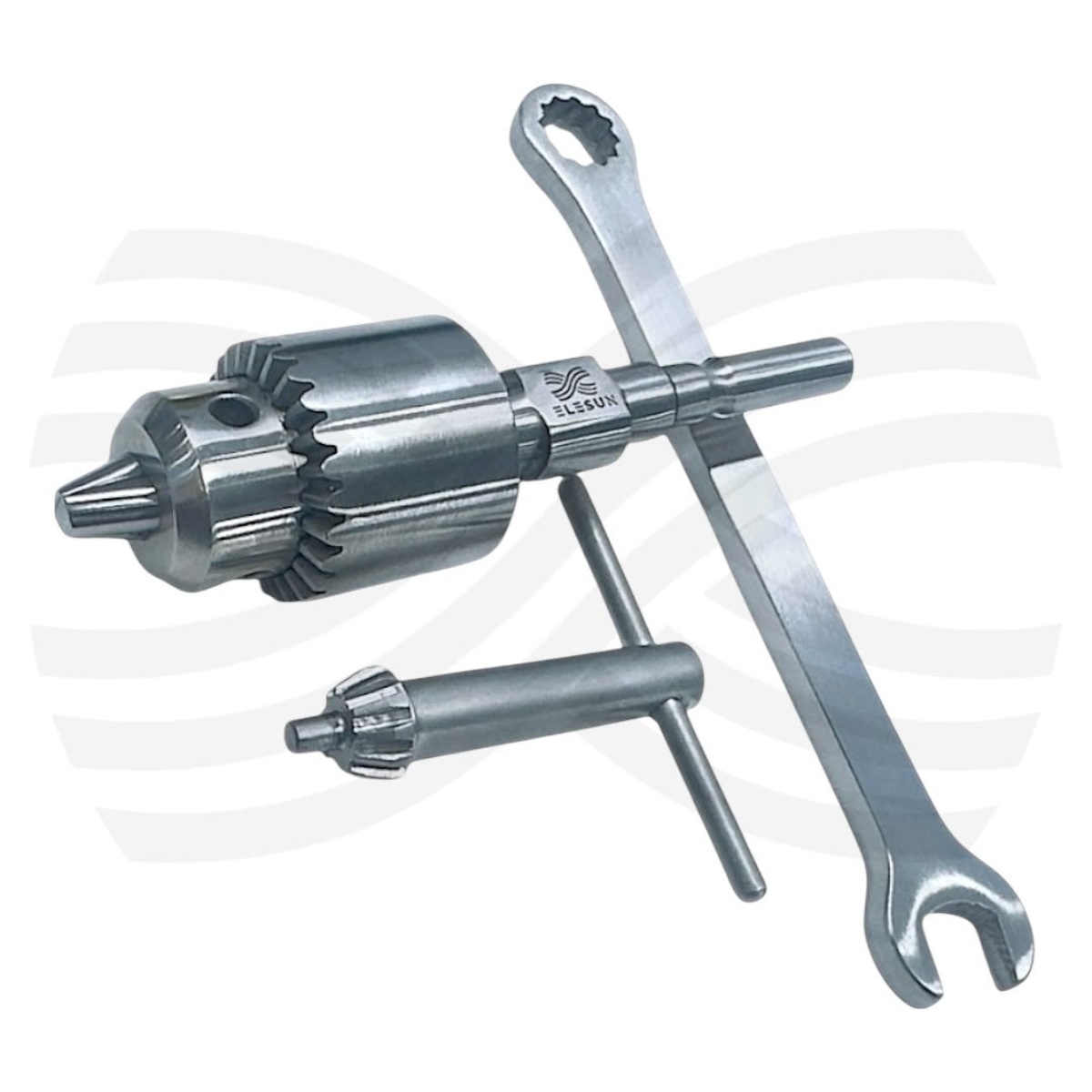
Surgical bone drill T-handle equipped with Jacobs keyed chuck and chuck key.
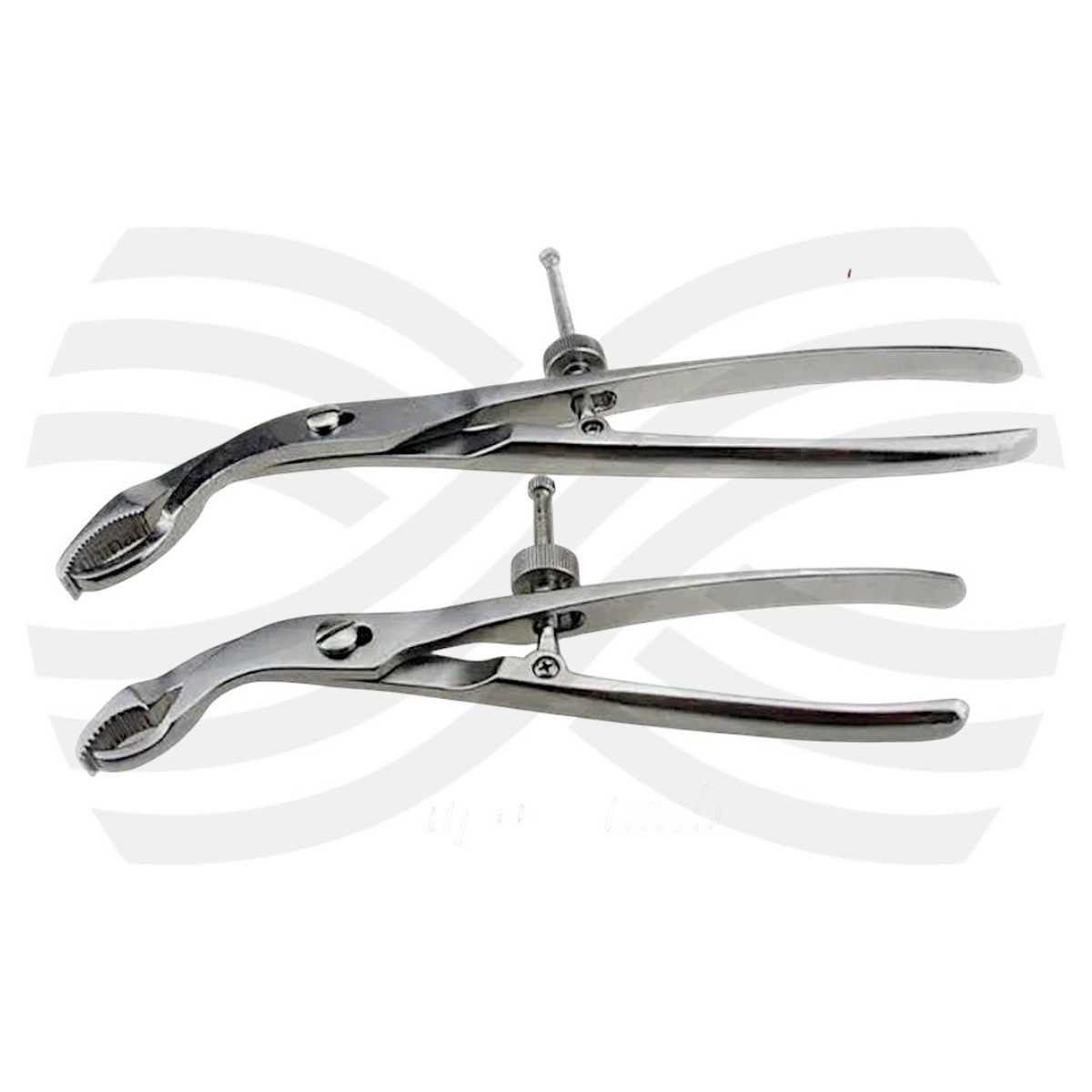
Bone reduction and stabilization clamp with threaded Speed-Lock fixation mechanism.
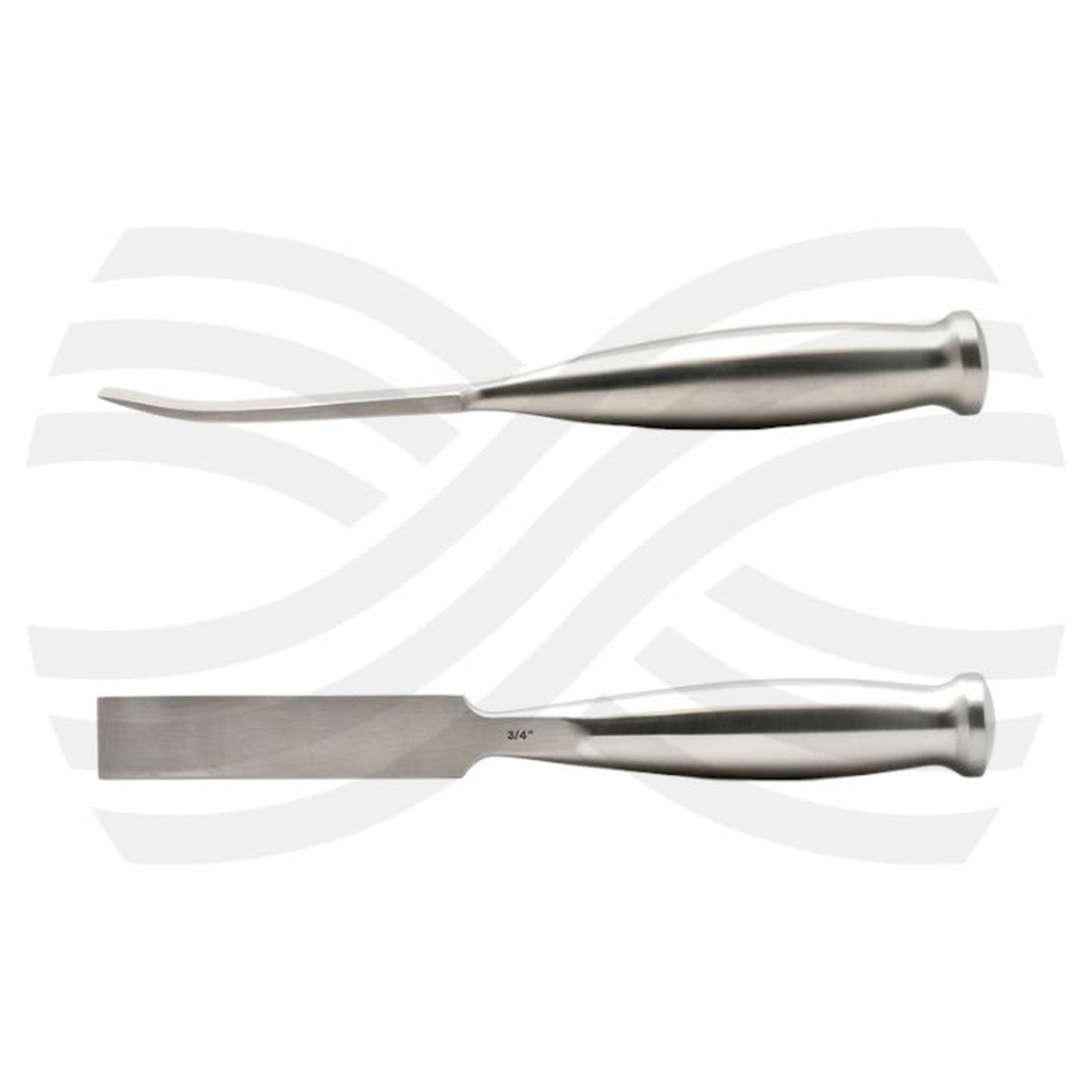
Surgical bone osteotome with beveled blade and flared impact handle cap.
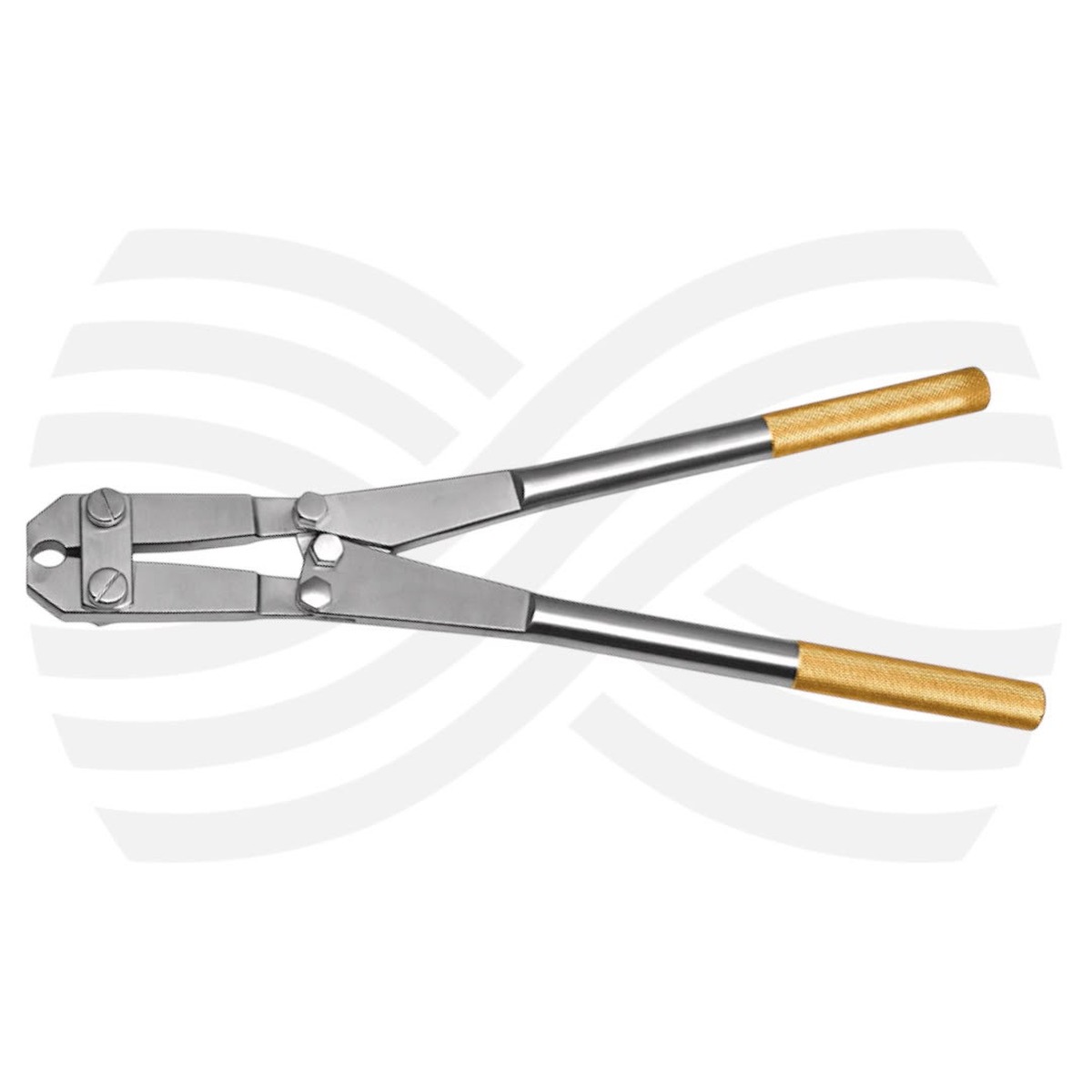
Front-cutting surgical pin and wire cutter featuring multi-linkage joint mechanism and extended handles.
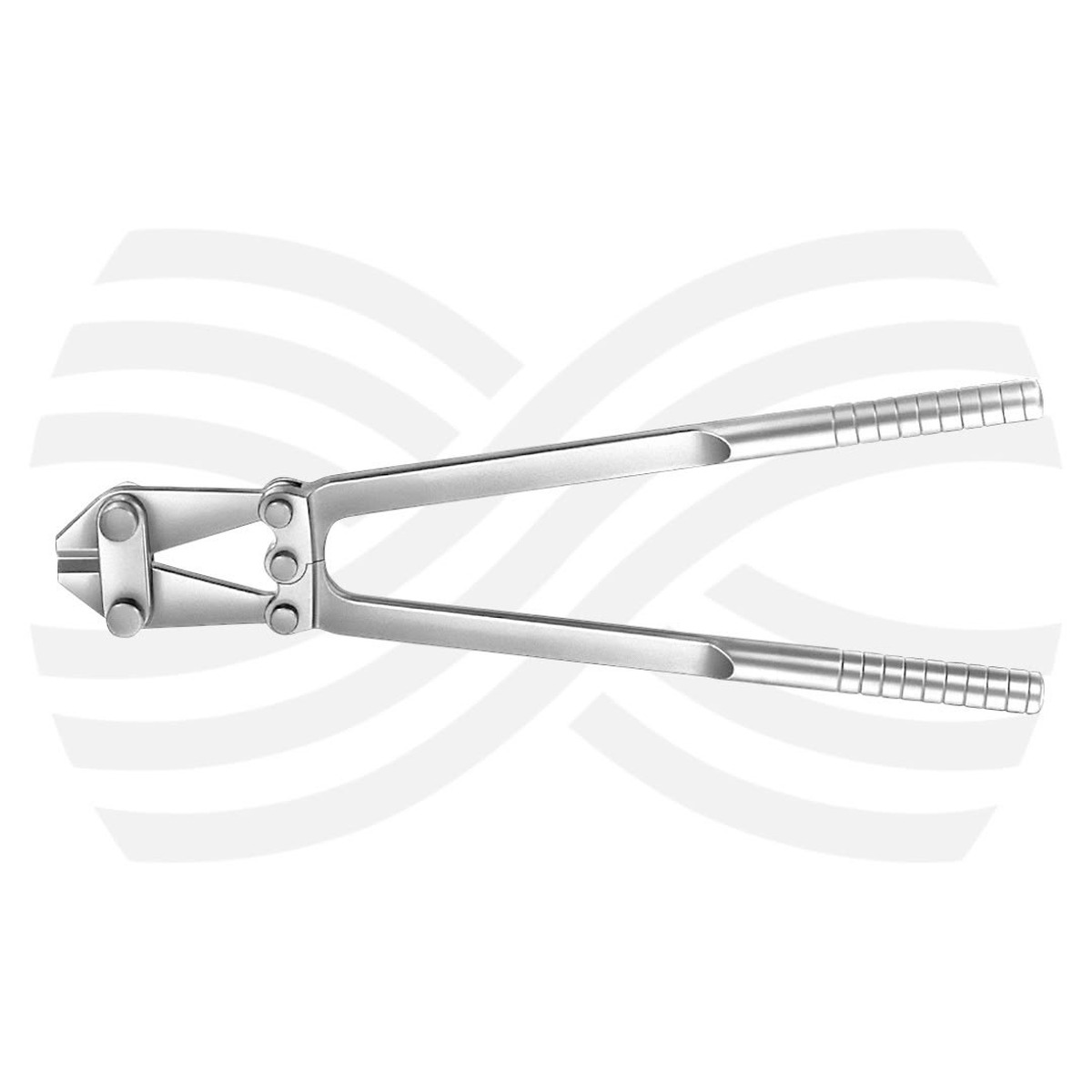
Surgical pin and wire cutter featuring a multi-linkage joint mechanism and circumferential grooved handles.
Overview of mechanical design principles, cutting geometry, and reprocessing considerations for orthopedic bone handling and fracture fixation instruments.
Double-action compound joints provide a mechanical advantage through a dual-pivot leverage system, assisting force transmission from the handles to the working jaws. The actual mechanical efficiency depends on the specific design configuration and instrument characteristics.
During bone resection procedures, an articulated leverage mechanism assists surgeons in managing cutting control throughout the jaw closure cycle.
Within bone resection instrumentation, the Liston double-action bone cutting forceps exemplifies compound leverage configuration. For further context, read the article on surgical instrument selection and geometric design principles.
Threaded locking mechanisms (such as Speed-Lock threaded rods with locking nuts) allow incremental adjustment and holding through continuous mechanical tightening.
The threaded rod design enables surgeons to control jaw opening and maintain clamp position during temporary bone fragment stabilization or plate positioning.
The bone reduction clamp with Speed-Lock demonstrates how threaded adjustment is used to maintain clamp position during orthopedic procedures.
In surgical pin and wire cutters, tungsten carbide (TC) inserts are utilized in select designs to enhance wear resistance at the cutting contact edges.
For osteosynthesis plate shaping, three-prong bending pliers provide opposing fulcrum anvils to contour bone plates to match anatomical curvatures.
Instruments such as the double-action TC pin & wire cutter and 3-prong bone plate bending pliers support mechanical contouring and cutting in the operative field. For an overview of stainless steel and titanium, see the article on surgical instrument materials and standards.
The design of surgical osteotomes and bone chisels relies on cutting blade geometry, solid shaft construction, and impaction-bearing surfaces.
Surgical bone mallets feature cylindrical heads and grooved handles for controlled manual impaction, while T-handle bone drills with Jacobs chucks allow secure manual gripping of pins and drill bits.
This instrumentation group includes the surgical bone osteotome with flared cap, surgical bone mallet with grooved grip, and the T-handle bone drill with Jacobs chuck, supporting primary operative steps in orthopedic trauma surgery.
Orthopedic surgical instruments with double-action joints, pivot pins, or threaded rods (such as Speed-Lock mechanisms and geared chucks) require careful attention during cleaning to remove organic residues from articulated crevices.
Cleaning, disinfection, and sterilization procedures must adhere to instrument manufacturer Instructions for Use (IFU) and validated healthcare facility infection control protocols.
For detailed clinical decontamination workflows and standard compliance, consult the monograph on surgical instrument reprocessing, cleaning & sterilization guide or explore the comprehensive ELESUN surgical solutions portfolio across specialty disciplines.
In-depth technical articles on surgical metallurgy, geometrical design, and clinical reprocessing protocols.
Clinical decontamination workflow, pitting corrosion prevention, and specialty instrument lifespan preservation.
Mechanical properties of Martensitic, Austenitic steels and Titanium in high-stress surgical corridors.
Mechanical analysis of straight, curved, angled, and bayonet shaft configurations under surgical exposure.
ELESUN clinical specialists provide direct technical consultation for surgical teams and hospital procurement boards.