
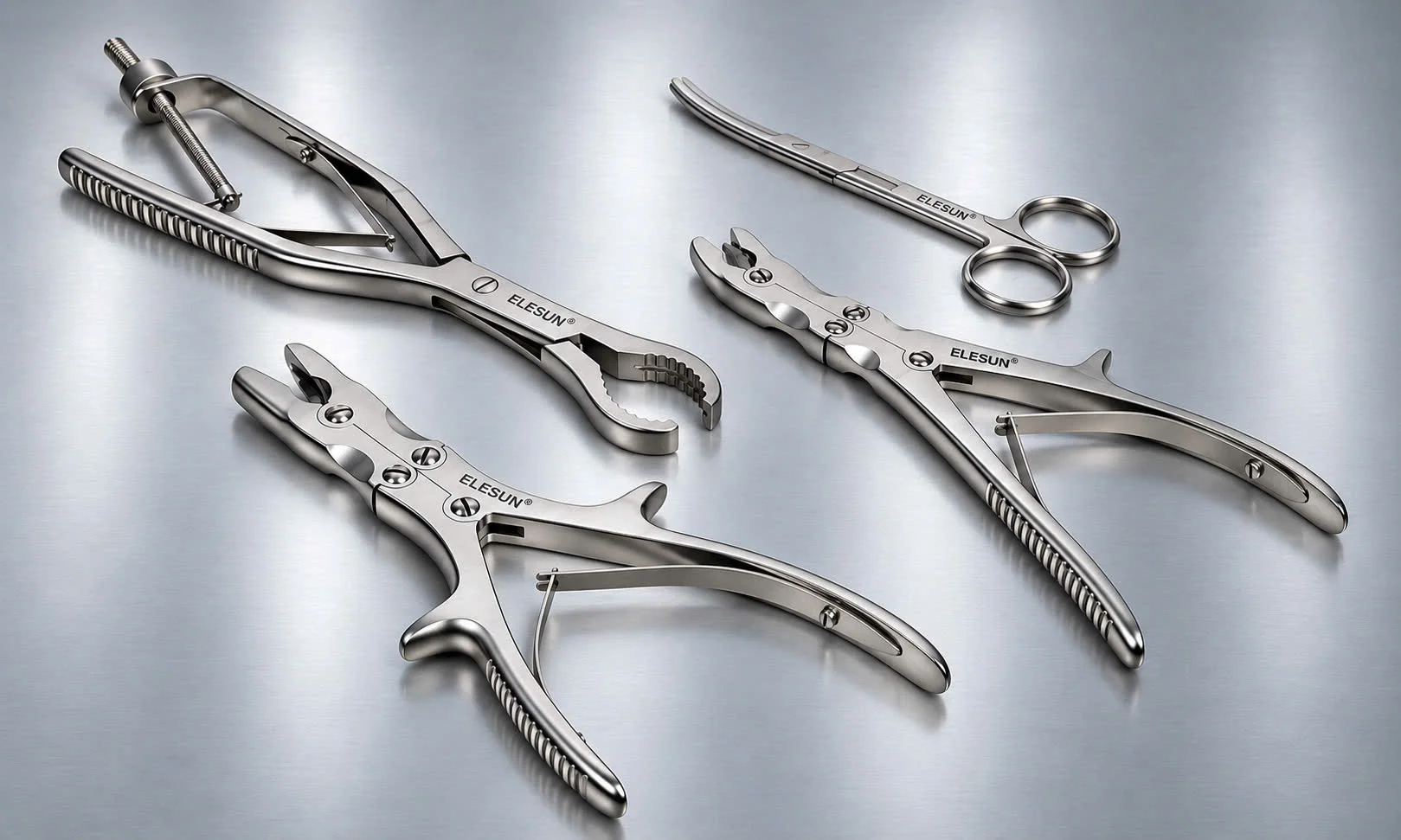
Explore key orthopedic trauma surgical instrument groups including reduction and bone-holding forceps, cutting instruments, drilling components and reamers, with practical selection considerations.
References: Content compiled and structured according to mechanical principles and fracture fixation techniques from the AO Surgery Reference, standard principles of internal fixation, and manufacturer technical documentation applicable to each instrument.
Orthopedic trauma surgery relies not on a single isolated tool, but on a cohesive instrument system coordinated across distinct surgical phases: surgical approach, exposure, anatomical reduction, fragment stabilization, bone bed preparation, drilling or reaming, and definitive internal fixation.
Therefore, when evaluating an orthopedic trauma surgical instrument set, the primary metric extends far beyond instrument count alone. Clinical teams must assess whether instruments match functional requirements, dimensional parameters, tip geometries, and procedural alignment with the planned surgical technique.
In operative fracture management, instruments such as reduction forceps, bone holding forceps, drill bits, and reamers are deployed at sequential steps to stabilize fragments and prepare bone for internal fixation.
1. Bone Holding and Reduction Forceps
A foundational category in any orthopedic instrument configuration is bone holding forceps and reduction forceps.
This instrument group assists the surgeon in establishing anatomical relationship between bone fragments and maintaining reduction throughout subsequent fixation maneuvers.
Working tip geometry is a critical variable. Depending on design, jaws differ in curvature, contact surface, profile, and vector of applied force.
Not all bone holding forceps are functionally interchangeable. Instrument selection must be guided by anatomical site, fracture morphology, and the planned operative technique.
2. Bone Cutting Forceps and Bone Rongeurs
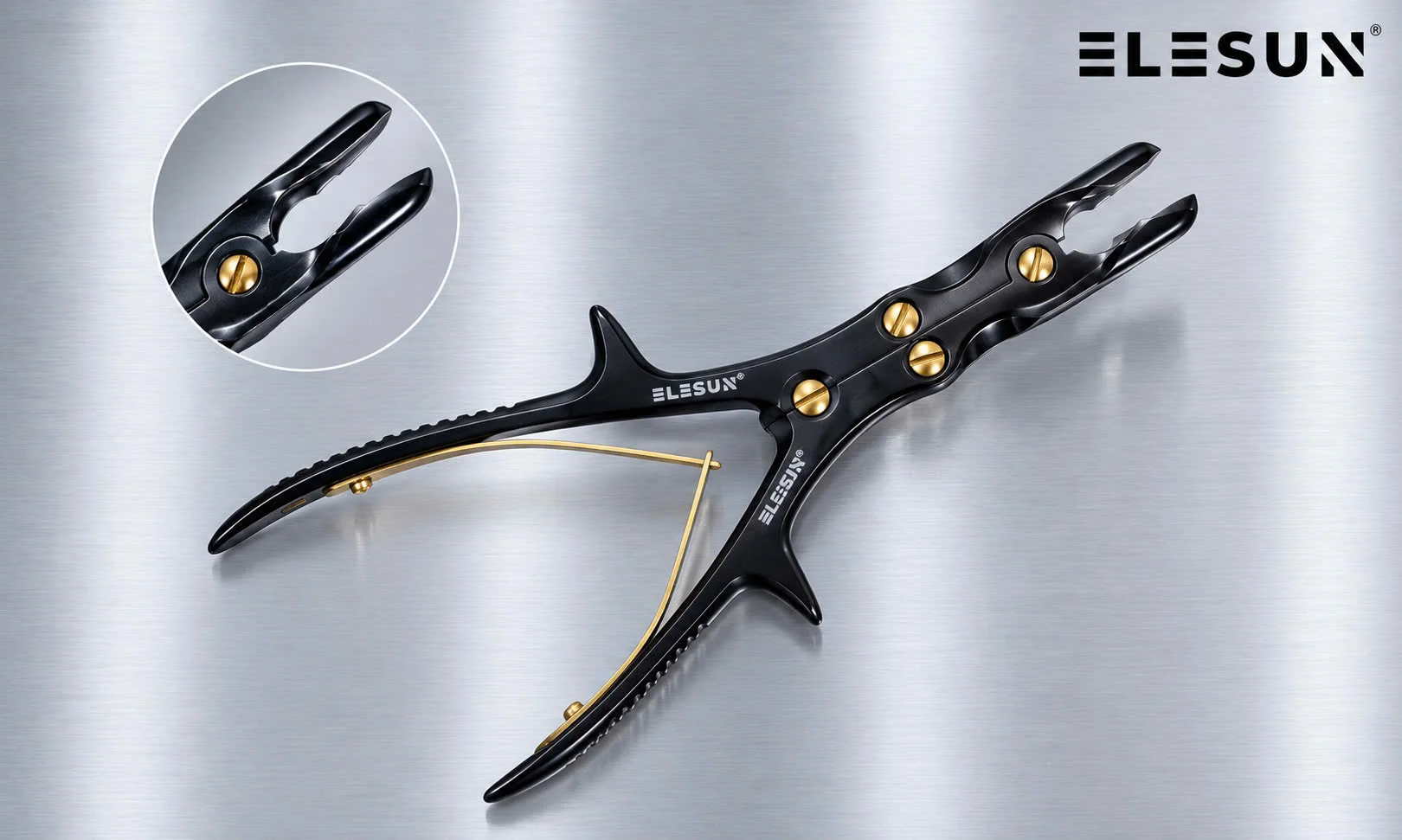
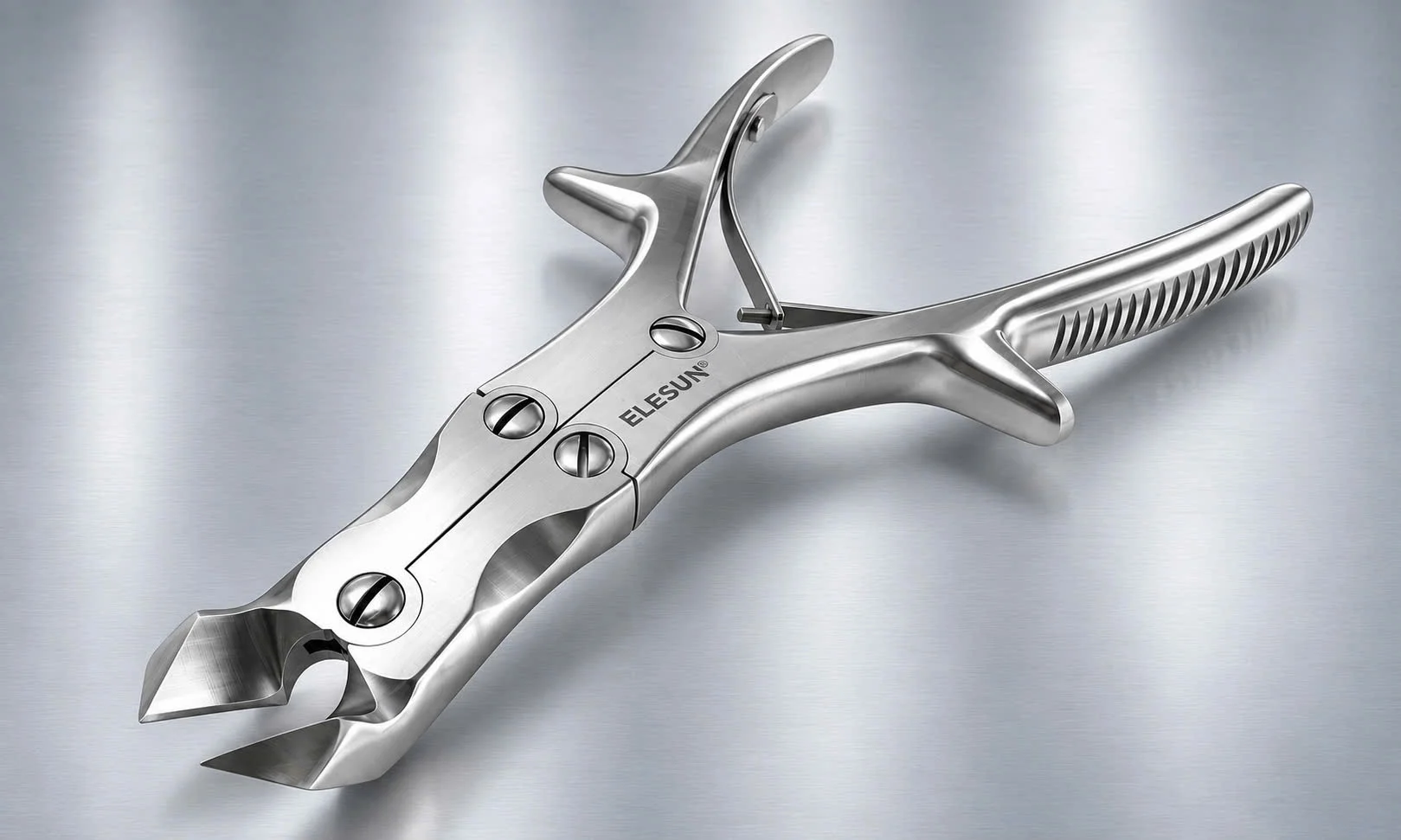
Another essential group in orthopedic surgery includes bone cutting forceps, bone rongeurs, and mechanical instruments engineered to excise or contour bone tissue.
Instrument configurations vary substantially across:
- working tip geometry
- mechanical leverage mechanisms
- overall length
- approach angles
- handle ergonomics
- joint hinge architecture
In double-action instruments, multiple mechanical linkages transfer force efficiently from handles to the working jaws, providing controlled cutting force.
Consequently, while categorized under bone processing instruments, distinct models serve different operative maneuvers and anatomical depths.
3. Drilling Systems in Orthopedic Surgery
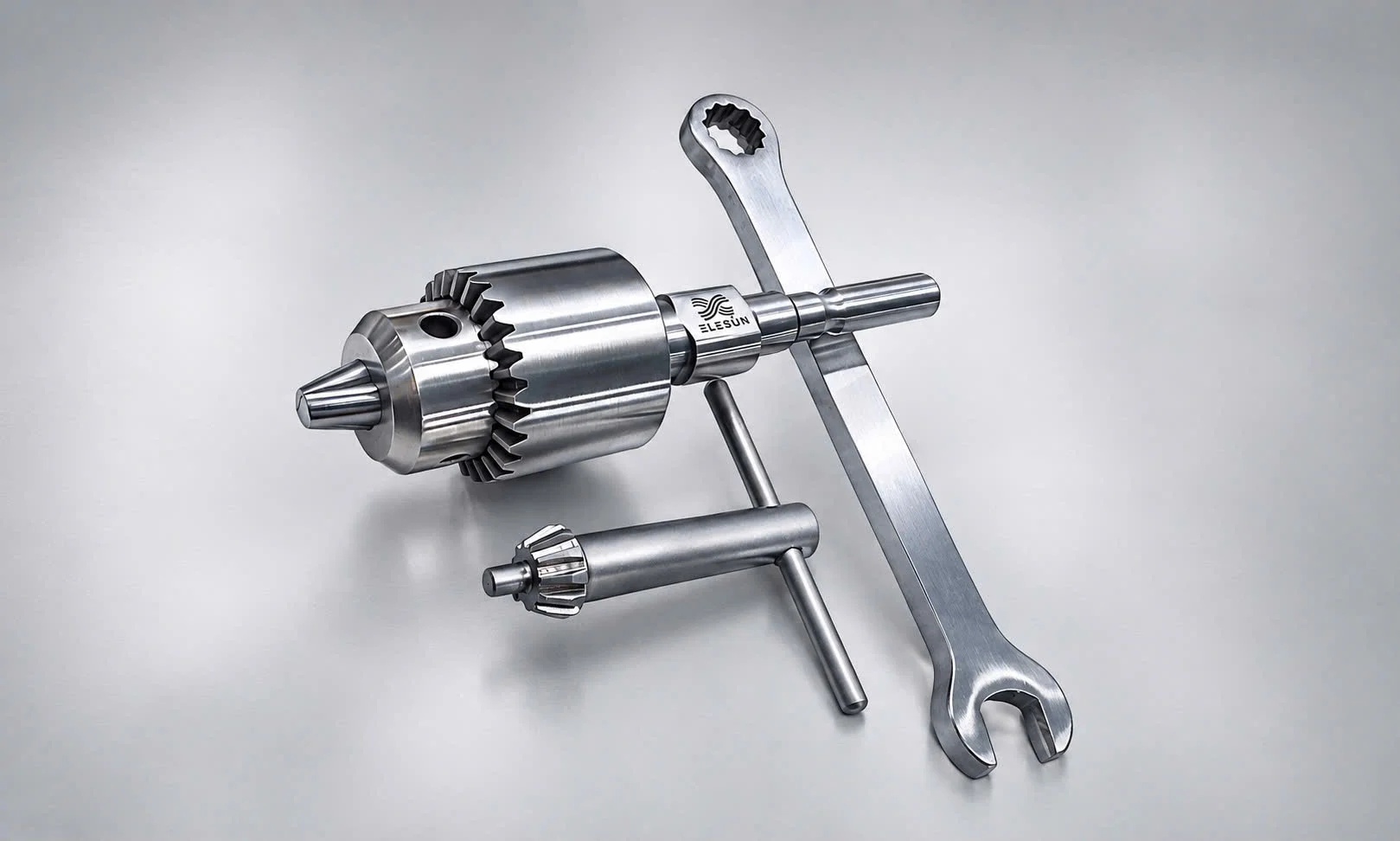
Drilling represents a key mechanical prerequisite in internal fixation procedures.
An orthopedic drilling assembly may incorporate:
- drill chuck
- chuck key
- drill bits
- drill guides
- adaptors
- corresponding surgical drill handpieces and drive couplings
The clinical priority encompasses not merely creating a pilot hole, but controlling hole diameter, trajectory, and dimensional relationship with the intended fixation system.
Drill bits, chucks, guides, and related components must therefore be configured in alignment with system compatibility standards.
4. Reaming Instruments and Canal Preparation
In specific orthopedic procedures, particularly intramedullary fixation techniques, preparation involves guide-wire placement, drilling, and progressive reaming.
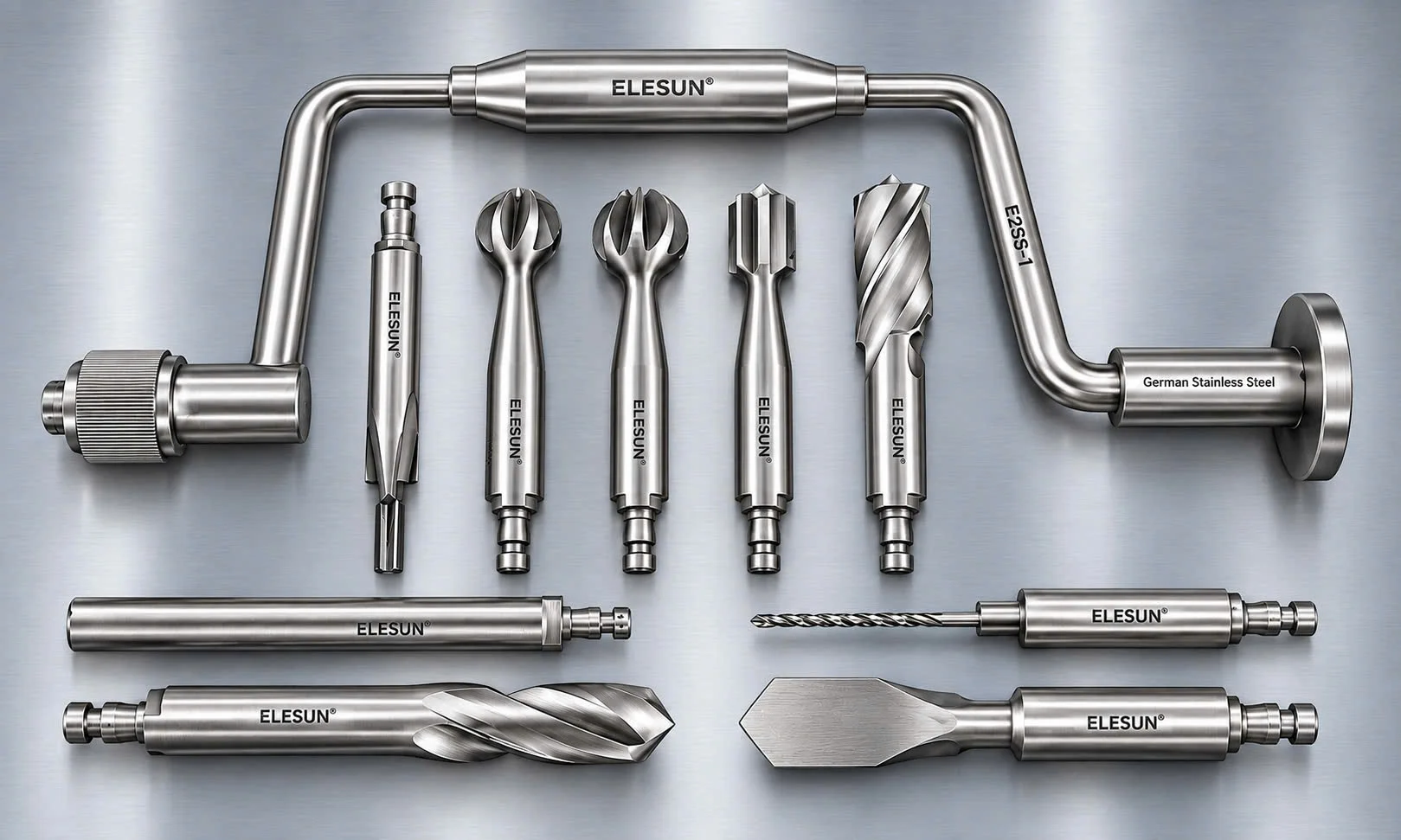
Reamer heads feature varied cutting flute configurations and mechanical connection interfaces.
When structuring an instrument set, specifications must match procedural and drive systems:
- diameter profiles
- working shaft length
- cutting flute geometry
- connection interfaces
- compatibility with power drive systems
- incremental sizing sequences for progressive canal reaming
Precise variant management is essential here, as outwardly similar instruments may possess critical variations in diameter increments or coupling interfaces.
5. Why Orthopedic Sets Should Be Structured by Workflow
A more effective methodology than selecting from product lists is structuring instrument sets around surgical workflow stages:
Access → Reduction → Bone holding → Drilling → Measuring → Fixation preparation → Implant placement → Verification → Closure
Mapping from this clinical chain clarifies necessary instrument categories at each step.
A workflow-centric approach eliminates two common pitfalls:
- omission of critical instruments during procedural transitions;
- oversized trays burdened by redundant or overlapping instrument profiles.
This philosophy underpins how ELESUN curates Surgical Instrument Solutions by Clinical Workflow, rather than presenting disconnected product inventories.
6. Key Selection Criteria for Orthopedic Trauma Instruments
Function and Working Geometry
Jaw curvature, serration profile, cutting edges, overall length, and force-transmission levers must align directly with the intended operative maneuvers.
Mechanical Leverage and Linkage
For forceps, rongeurs, and double-action instruments, joint linkage architecture and mechanical advantage directly govern tool responsiveness and tactile feedback during manual handling.
Dimensions and Configuration
An instrument category may require diverse length and profile options to accommodate varying patient anatomy and access corridors.
Compatibility with Fixation Systems
Drill bits, sleeves, chucks, taps, and screwdrivers must conform to dimensional specifications of the selected plate, screw, or nail fixation system.
Materials and Surface Finishing
Material composition and surface treatments must be verified per model. Specifications from a photograph or single product must not be generalized across an entire product group without technical documentation.
Reprocessing, Sterilization, and Maintenance
Instruments incorporating joints, springs, or linkages must be maintained and sterilized in accordance with manufacturer IFU and hospital infection prevention protocols.
7. Representative Orthopedic Instrument Categories
Bone Holding and Reduction Forceps
Bone holding forceps, reduction forceps, and specialized clamping configurations.
Bone Cutting and Contouring Instruments
Bone cutting forceps, bone rongeurs, osteotomes, chisels, and bone-resection tools.
Drilling Components
Drill bits, drill chucks, drill guides, and drive adaptors.
Reaming Instruments
Reamer heads, shafts, and connection fittings.
Measurement and Fixation Preparation
Depth gauges, bone taps, screwdrivers, and system-specific insertion instruments.
Access and Soft-Tissue Handling
Retractors, surgical scissors, periosteal elevators, and dissection aids.
Specific configuration depends on surgical indication, technique, and internal fixation systems. Learn more about ELESUN Trauma & Orthopedics Instruments and explore our full portfolio of ELESUN Surgical Instruments.
8. ELESUN's Approach to Orthopedic Trauma Instruments
ELESUN organizes its orthopedic catalog around clinical functional steps within the operative sequence, spanning reduction, bone stabilization, resection, drilling, reaming, and fixation facilitation.
Photographs in this article illustrate diverse mechanical configurations of ELESUN orthopedic instruments, including forceps, cutting tools, drill components, and reamers.
Parameters including dimensions, metallurgy, length, tip design, surface treatment, connection interface, and system compatibility must be determined per specific model.
For hospitals, surgical centers, and clinicians structuring sets for specific procedural techniques or implant systems, configuration should derive from workflow requirements rather than isolated instrument selection.
Configure Orthopedic Sets Based on Procedural Workflow
ELESUN provides instrument groups supporting sequential orthopedic trauma phases, from bone reduction and clamping to cutting, drilling, and reaming.
9. Frequently Asked Questions About Orthopedic Instruments
What instruments are included in an orthopedic trauma surgical set?
Depending on the clinical procedure, an orthopedic set may comprise reduction and bone holding forceps, bone cutting instruments, retractors, drill bits, drill guides, reamers, depth gauges, taps, screwdrivers, and system-specific instruments compatible with the internal fixation implant system.
Are bone holding forceps and reduction forceps identical?
The two groups share overlapping clinical functions but are not synonymous. Reduction forceps specifically focus on bringing bone fragments into anatomical alignment and maintaining reduction, whereas bone holding forceps is a broader term for instruments designed to grasp and stabilize bone. The specific working tip geometry dictates procedural suitability.
Why are reduction forceps critical in fracture fixation?
Reduction forceps bring fractured fragments into anatomical alignment and maintain stability throughout subsequent steps of the internal fixation sequence. Specific clinical application depends on fracture pattern, anatomical region, and surgical approach.
How does an orthopedic reamer differ from a drill bit?
Drill bits are designed to prepare precision pilot or clearance holes with defined diameter and trajectory. Reamers are employed when enlarging, shaping, or preparing an intramedullary canal or working corridor according to system parameters. Specific function depends on cutting flutes and operative technique.
Can orthopedic surgical instruments be selected based on size alone?
No. Beyond nominal dimensions, selection requires evaluating tip geometry, mechanical leverage, connection interfaces, fixation system compatibility, anatomical constraints, and the planned operative technique.
Do all ELESUN orthopedic instruments share identical metallurgy and materials?
No such assumption should be made. Material specifications must be verified against individual models or SKUs. Material indications on a specific instrument or photograph cannot be extrapolated across the entire catalog without verified technical documentation.
Professional Notice
The information provided in this article is for educational purposes regarding instrument characteristics and selection criteria. Selection, clinical use, reprocessing, and sterilization of medical devices must strictly adhere to the manufacturer's Instructions for Use (IFU), applicable regulatory documentation, and institutional hospital infection control protocols.