
When comparing surgical instruments in a catalogue, the finger rings are often the first feature you notice. To identify the instrument, look more closely at the working end. For scissors, compare blade width and the proportion of blade to handle. For clamps and holders, examine jaw length, taper and gripping surfaces. The locking mechanism offers another clue, especially for self-retaining retractors.
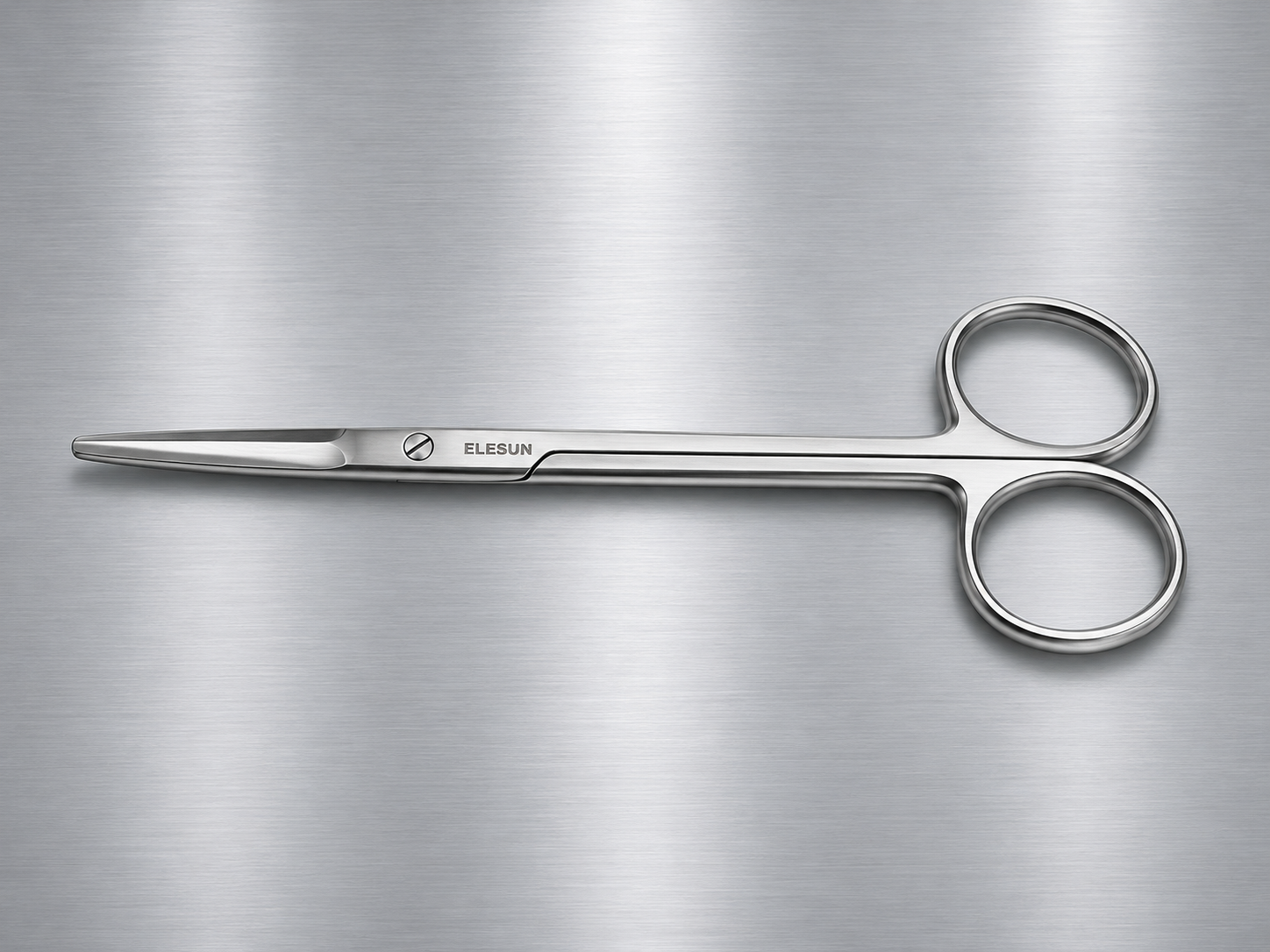
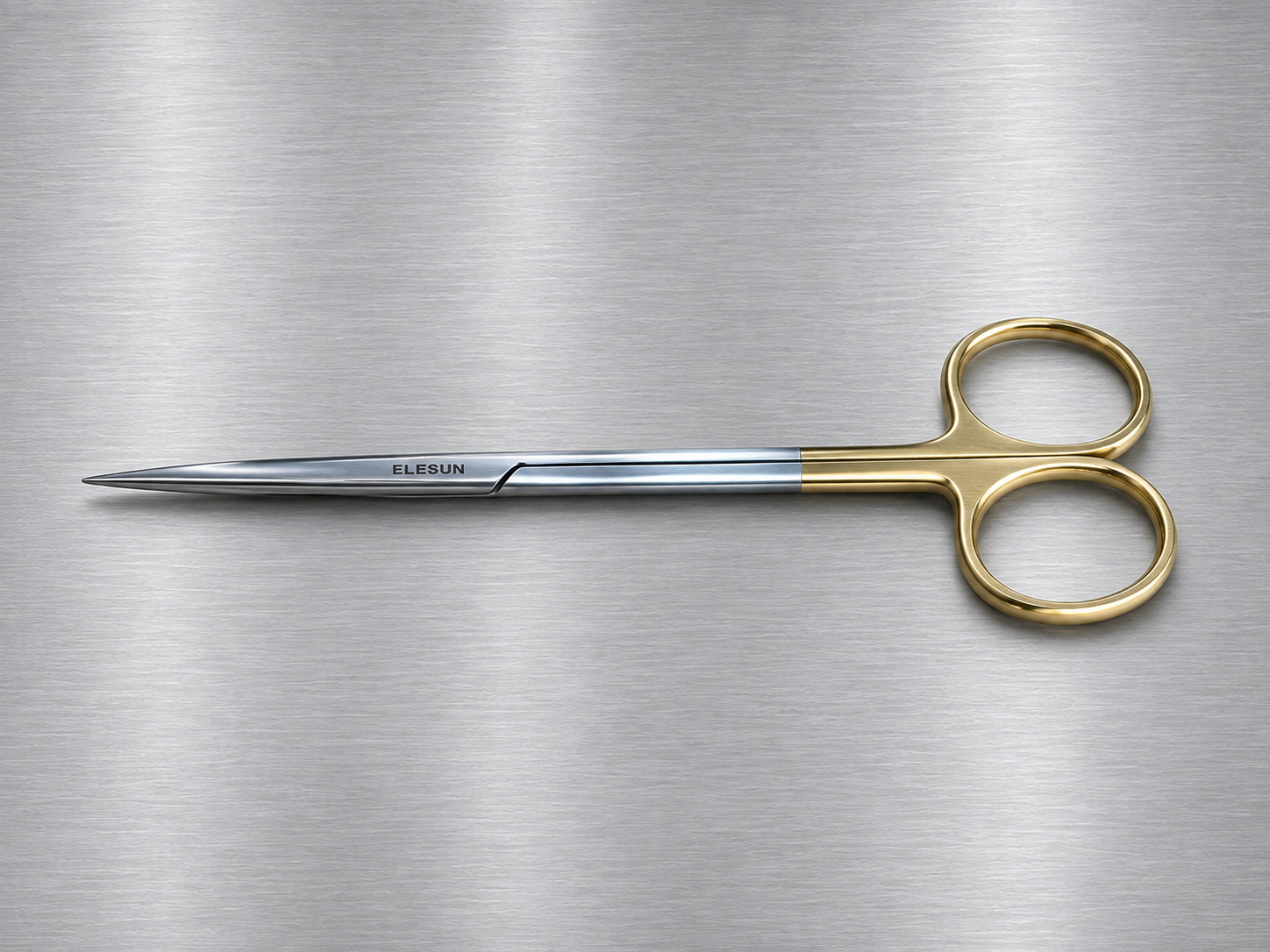
Mayo and Metzenbaum Scissors – Compare Handle-to-Blade Proportions
Placed side by side, the two straight scissors show that the Mayo–Lexer pictured has broader blades. The Metzenbaum has slimmer blades and handles that are long relative to the blades. Both features are easy to compare in full-length photos.
Both families come in straight and curved patterns. When looking up a model, check blade width and handle-to-blade proportions first, then use the straight or curved pattern to identify the variant.
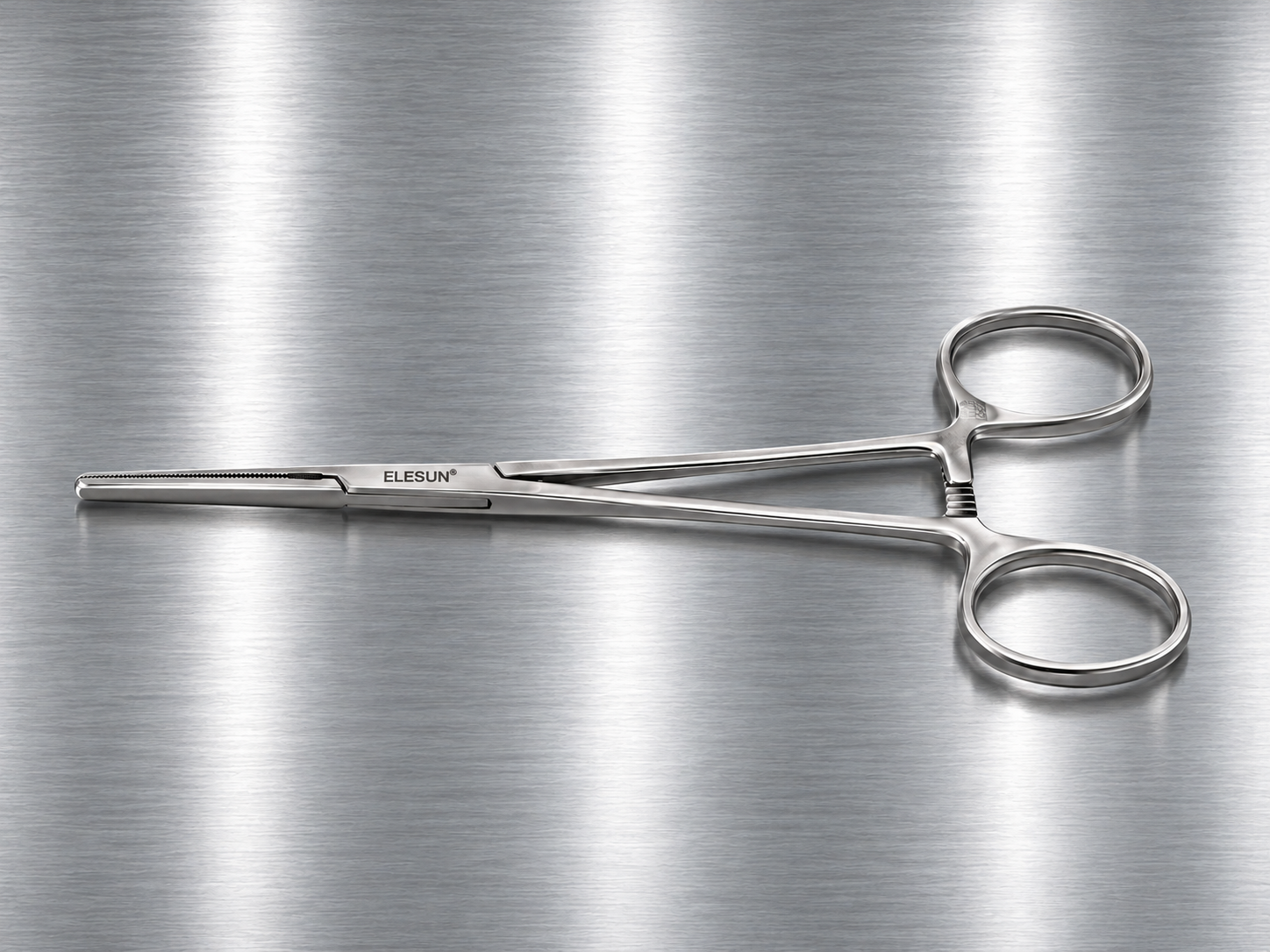
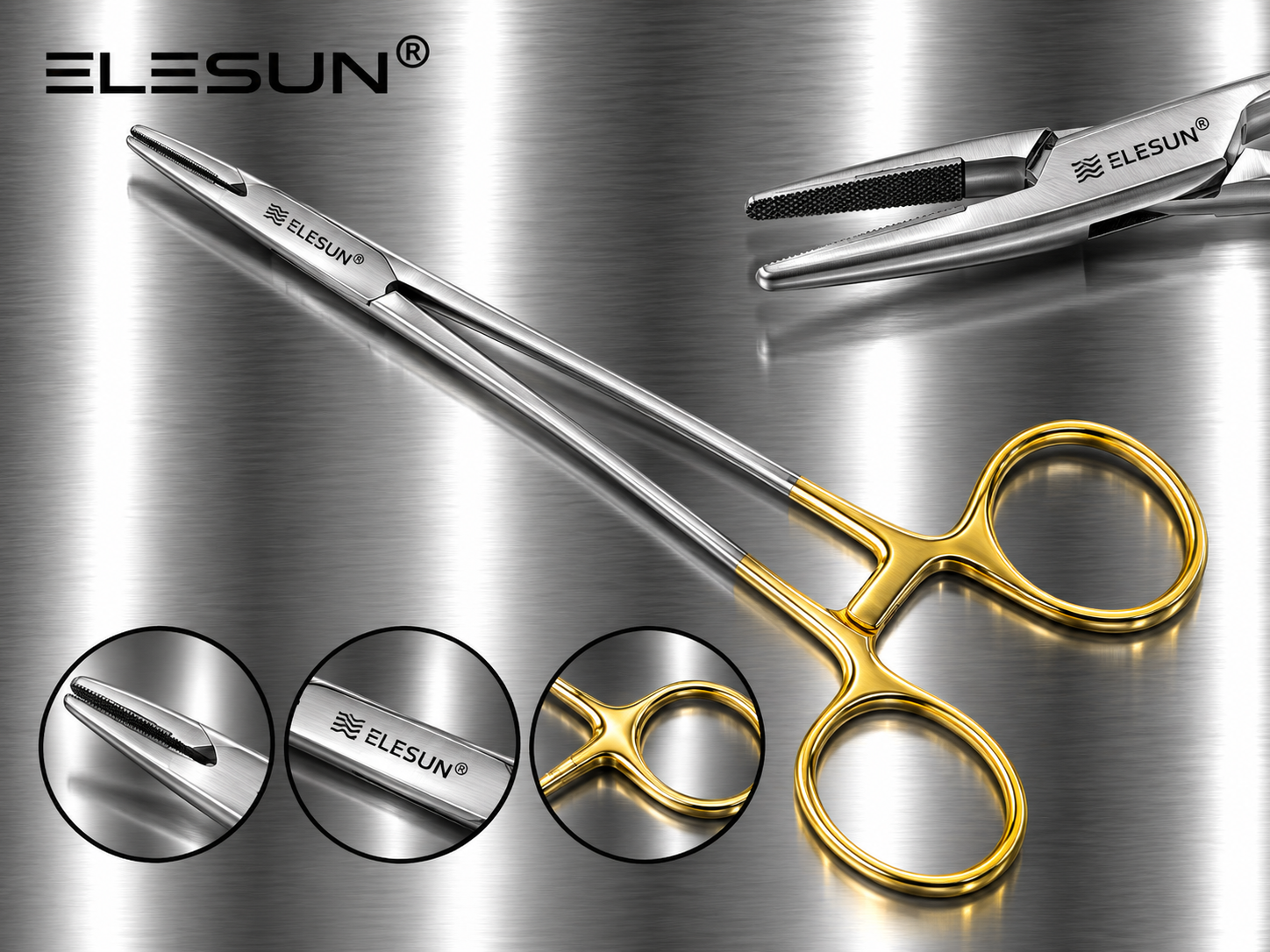
Mosquito Hemostat and Ring-Handled Needle Holder – Compare Jaw Shape
The Mosquito hemostat and needle holder shown both have finger rings and a ratchet. The jaws make the difference clearer. Mosquito jaws are small and taper toward the tip. Ring-handled needle holders typically have short, sturdy jaws with gripping surfaces designed to hold a suture needle.
If the full-length photo is unclear, use a jaw close-up to compare length, taper and gripping surfaces. These details are also worth checking when a catalogue abbreviates the instrument name.
English–Vietnamese Basic Surgical Instrument Reference
Basic surgical instruments can be looked up by six functions: cutting and dissection, tissue grasping, hemostasis, retraction and exposure, needle holding, and auxiliary tasks. The table uses selected examples to illustrate identifying features. The contents of each set vary by specialty and procedure.
| Function | English name | Vietnamese name | Details to look for |
|---|---|---|---|
| Cutting and dissection | Mayo scissors | Kéo Mayo | Typically have broad, sturdy blades. Straight and curved patterns are available. |
| Cutting and dissection | Metzenbaum scissors | Kéo Metzenbaum | Slim blades with handles that are long relative to the blades. |
| Tissue grasping | DeBakey tissue forceps | Nhíp phẫu tích DeBakey | Tapered tweezer-style tips. Compare the rows of serrations in a close-up of the jaws. |
| Hemostasis | Halsted mosquito hemostat | Kẹp cầm máu Mosquito | Ring handles with a ratchet and small, tapered jaws. Available in straight and curved patterns. |
| Retraction and exposure | Weitlaner self-retaining retractor | Banh tự giữ Weitlaner | Two pronged arms and a locking mechanism that holds the opening. |
| Needle holding | Needle holder | Kẹp mang kim | Many ring-handled designs have short, sturdy jaws with gripping surfaces that hold the needle. |
| Auxiliary | Backhaus towel clamp | Kẹp săng Backhaus | Inward-curving pointed tips and locking ring handles. |
Browse Instrument Models and Specifications
Once you have identified the instrument, compare images, lengths and variants in the Surgical scissors, Tissue forceps, Surgical retractors, and Needle holders groups.
To see how these instruments are combined in a specialty set, see the ELESUN Vascular Surgery Instrument Set.